Opening remarks for moderated conversation at Voices of the Eleventh District
I’m delighted to welcome all of you to the Dallas Fed this evening. The perspectives you share with us are invaluable. You help our researchers understand the nuances of the economy, beyond what we can glean from official statistics. And you help me understand where the economy is headed and how monetary policy can make a difference.
I’d like to start by sharing my own perspective on the economy, coming out of the Federal Open Market Committee (FOMC) meeting two weeks ago. These are my views and not necessarily those of my FOMC colleagues.
Over the summer and early fall, incoming information has confirmed key elements of the economic outlook I’ve had for some time.
Inflation is falling as transitory factors fade. But it is trending toward the mid-2’s, not all the way to the FOMC’s 2 percent goal. A half-decade of above-target inflation has badly strained Americans’ budgets. We must restore price stability.
Meanwhile, economic growth is strengthening. And the labor market remains well balanced. At 4.1 percent, the unemployment rate is close to most estimates of the lowest sustainable level.
Congress gave the FOMC a dual mandate in monetary policy. We are charged with delivering both maximum employment and stable prices. In combination, a balanced labor market and inflation trending above target mean the stance of policy has been offsides. In my view, the FOMC should set interest rates so we are on track to achieve both of our dual mandate goals, not just one.
Doing so will require tighter monetary policy. The FOMC took an important first step at our September meeting by raising the target range for the federal funds rate 25 basis points. Still, I currently estimate the target range needs to rise an additional 50 basis points or more to appropriately balance the outlook and risks for our dual mandate goals.
Market participants likewise expect higher interest rates. Long-term yields have risen significantly in recent weeks. Market contacts tell me the runup began with expectations for strong nominal growth and a higher neutral rate of interest. However, some model-based decompositions also indicate a role for higher term premiums, in addition to higher risk-free rates. Shifts in market risk-free rates reveal what market participants think the Fed will need to do; they don’t do our work for us. But higher term premiums can slow the economy, reducing the need to tighten monetary policy. These decompositions depend on models and subjective judgments, and conditions can change. I’ll continue to watch these developments and assess their implications.
Strong growth and resilient consumer spending are signs monetary policy is not restrictive. Take just one example from what survey respondents like you are telling the Dallas Fed: The Texas Manufacturing Outlook Survey found output accelerated sharply in September.
Without any policy restriction, inflation will likely continue its above-target trend. Policy therefore needs to become restrictive. At minimum, a few additional increases in the target range would undo the FOMC’s risk management cuts from last fall. But the end goal should be to make policy modestly restrictive and put the economy on a path to sustaining both maximum employment and stable prices.
The level of the fed funds target range that creates some restriction is uncertain. It changes over time and depends on the broader financial environment. I will continue to watch labor markets, prices, growth, consumption and financial conditions to evaluate whether policy is becoming restrictive. Reports from survey respondents like all of you will contribute meaningfully to that assessment. Thank you again for the insights you share with us and for being here tonight.
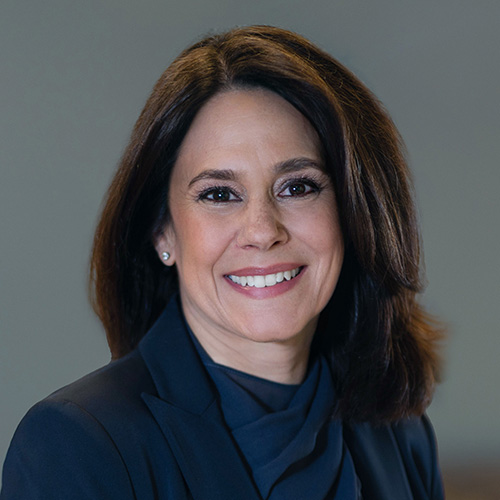
Lorie Logan is president and CEO of the Federal Reserve Bank of Dallas.
The views expressed are my own and do not necessarily reflect official positions of the Federal Reserve System.