Can the U.S. power industry keep pace with rapid growth in AI?
As the U.S. tech industry builds multiple giga-scale data centers across the country to support growing use of artificial intelligence (AI), demand for reliable and affordable power has surged to a rate not seen in decades. Tech hyperscalers plan to invest hundreds of billions of dollars in US infrastructure over the next two years. In Texas alone, data centers may drive a doubling of the state’s total power demand by 2030. This growth creates both challenges and opportunities for the power industry.
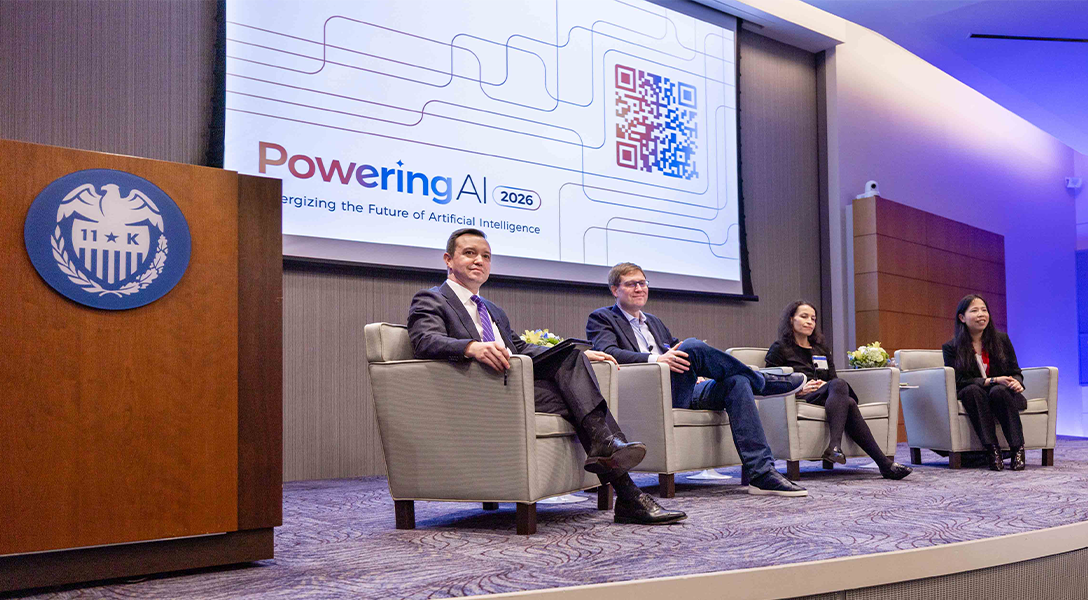
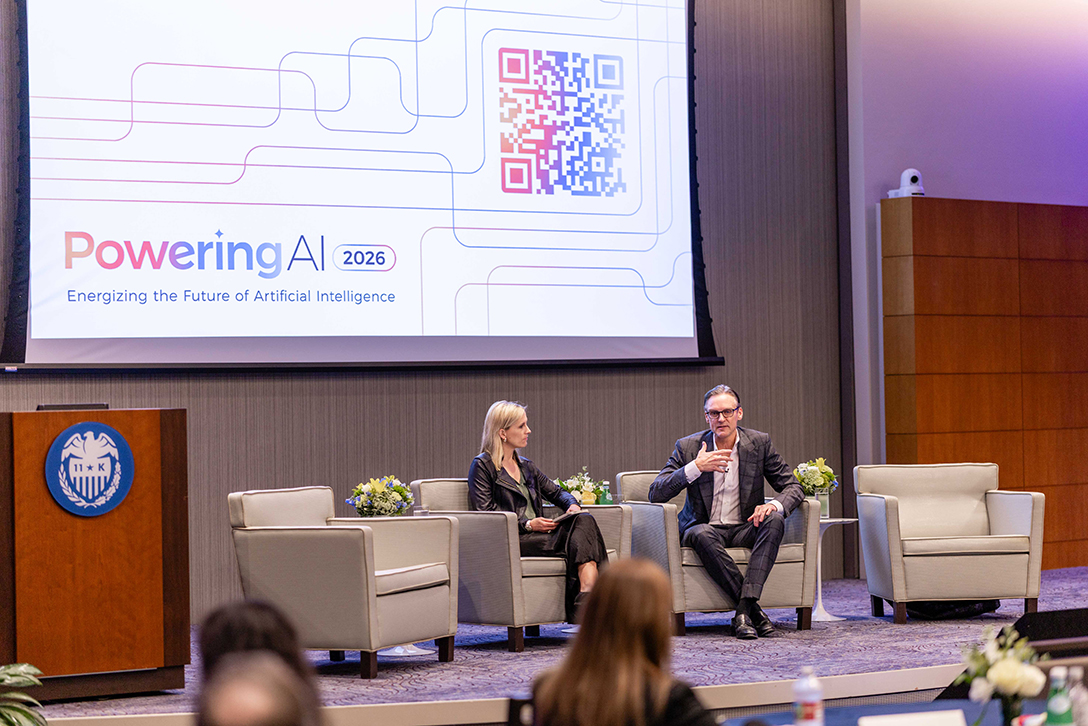
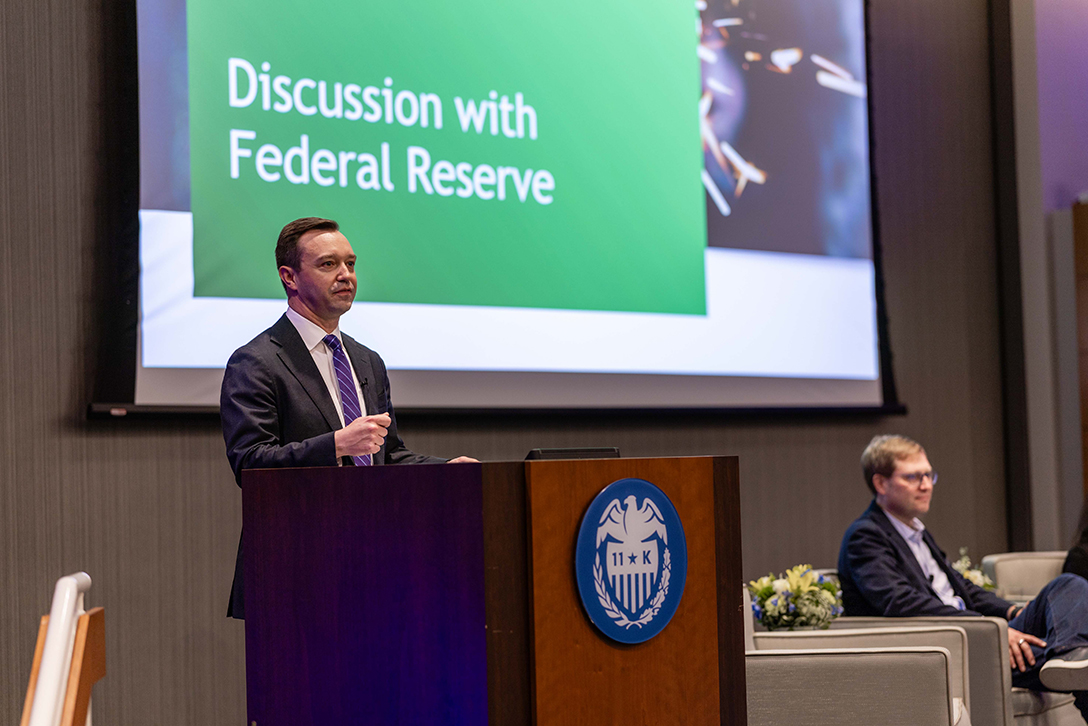
To better understand this intersection of AI and energy, the Federal Reserve Bank of Dallas hosted the Powering AI conference on March 4-5, 2026, examining how the United States will power its AI ambitions. Takeaways from the conference include:
- Electricity infrastructure buildout—constrained by numerous supply difficulties—remains a large obstacle for powering AI workloads.
- Supply constraints go beyond any single factor, but include generating capacity, backlogs for electrical components, construction costs and financing.
- Additional constraints include demand uncertainty, labor shortages and community opposition.
In essence, coordination challenges—not technological limitations—create the biggest bottlenecks for AI and energy. Conference participants agreed that the industry has the technical wherewithal to tackle this challenge, but success will require creativity, agility, transparency and reform to effectively power AI. Below is a summary of how conference participants viewed powering AI in the spring of 2026.

Construction timelines and costs constrain growth, but existing infrastructure has the potential to meet near-term demand
By driving historic increases in power demand, AI is creating extremely rapid load growth forecasts. However, timing and costs, not volume, provide the most risk.
For example, data center construction timelines of two years clash with new power plant construction that takes easily twice that. Plus, transmission buildout periods can be as long as 7-10 years. Such fundamental timing mismatches complicate infrastructure planning.
That said, in the near term existing infrastructure can better meet demand through higher utilization, conference participants said. Although some headlines suggest looming power shortages, existing generating capacity coupled with load flexibility can accommodate substantial growth. As one speaker cited, Texas fossil fuel plants currently operate at less than 50 percent capacity over the course of a year but can scale to 70 percent or higher utilization.
The overall effect of increased power demand on electricity prices remains unclear. On one hand, increased utilization, as described above, might help decrease fixed costs on the grid in the shorter term, potentially creating lower per-unit electricity prices. On the other hand, adding AI data centers to the grid can increase prices through higher variable and generation costs.
Flexible data center demand could address reliability concerns
This rapid increase in power demand could cause reliability issues. As one speaker noted, traditional cloud-based data centers typically requested around 30 MW of power, took years to reach full capacity, and ran at relatively low utilization rates. Today’s reality may look much different.
Rising power demand at peak times proves particularly concerning. In response, some speakers emphasized that data centers could evolve from inflexible baseload consumers (industrial users with relatively stable power consumption) to flexible loads that react to price signals and grid conditions.
Texas winters provide one example of chronic peak demand, which typically strains the grid. However, in January 2026, Winter Storm Fern demonstrated the effectiveness of demand flexibility, as commercial and industrial loads were voluntarily curtailed during peak conditions to prevent price spikes and keep actual demand below forecasts.
Bring-your-own-power arrangements and on-site generation are also becoming prerequisites for faster interconnection in some regions. For speedy interconnection, data centers can commit to curtailment, backup generation and workload shifting.
At the same time, forecasts vary regarding how widespread and rapid AI adoption will be, with direct implications for power consumption growth. Some view AI as transformational in the same way the internet and cell phones were, with users integrating more AI tools into their work and personal lives. Others see hype. As one speaker said, with many companies piloting AI, only about 5 percent achieve scaled value, with most organizations remaining in “pilot purgatory.”
Powering AI reveals skilled labor shortages
Skilled labor shortages represent perhaps the most significant constraint on the growth of AI data centers, especially due to the lack of express solutions. Many panelists expressed concern about the lack of qualified workers who can perform the highly technical work to build and maintain AI data centers. These workers include electricians, technicians, network engineers and specialized trades across solar, battery, data center and gas generation projects.
Some presenters discussed the need for more training in these trades, pointing to examples of companies directly investing in reskilling. Others suggested more young people could be drawn by the high wages associated with these trades, if advertised appropriately.
Abundant capital requires firm commitments to unlock investments
On the financing side, infrastructure investment in AI is unprecedented in scale. Hyperscalers plan $700 billion to $900 billion in annual capital spending in 2026-2027, with Amazon alone planning a $220 billion capital spending budget. However, panelists generally did not view these as cause for concern. As one panelist noted, hyperscalers generate operating cash flows covering around 80 percent of capital expenditures spending, a reasonable ratio.
The $1.5 trillion financing gap goes beyond hyperscaler balance sheets and can be filled through diversified debt markets (corporate bonds, private credit and securitization). In fact, one speaker noted that debt discussions with investors jumped from non-starter to 80 percent of conversations in just one year. Strong investor demand for hyperscaler debt issuance supports this anecdotal evidence, although there are potential signs of cooling enthusiasm as spending continues at an increasingly rapid pace.
The critical challenge is utilities and investors need firm financial commitments and stricter criteria to distinguish real projects from speculation. The Electric Reliability Council of Texas (ERCOT) operates the Texas grid and faces an unprecedented number of projects from data centers and others seeking approval. Their interconnection queue, a list of proposed projects which are evaluated until they are added to the grid, sits at 232 GW in future demand (through 2030). For reference, the all-time record demand in ERCOT was just set at 91 GW in July 2026. In fact, the Texas grid queue is “so bullish, it’s bearish,” noted one representative. Forecasts ranging from “zero to infinity” are impractical for investment decisions.
Similarly, the low capital requirements for land deals have led many data center companies to speculate on property, creating a primary bubble risk. However, shortly after the conference, ERCOT issued new rules requiring large loads seeking interconnection to post significantly higher, non-refundable fees with their applications. More recently, Texas Governor Greg Abbott also outlined state level requirements.
The influence of political and social dynamics on powering AI
One of the greatest considerations in powering AI is not technical, but instead social and political. Community resistance across the nation creates hurdles for projects. According to one speaker, communities have blocked billions of dollars in data center investment.
Other speakers noted that public opinion about AI leads to data center project fragility. Among other concerns, communities fear higher electricity costs, noise, water use, pollution/environmental factors, grid reliability impacts and lack of transparency.
Shifting geographic dynamics may ease some communities’ fears but exacerbate others. One speaker stated that data centers are moving from city centers to unincorporated areas. Latency proves less critical than expected for many AI workloads. Power availability is more ample in low-population areas, and local zoning powers are far less effective than in cities. While this may ease urban communities’ burdens, rural communities could feel greater effects.
In response, many speakers encouraged community connection. Multiple panelists also discussed the importance of conversations regarding actual versus feared impact of AI on employment. A Dallas Fed economist and other panelists even noted that unemployment driven by technological change is not a new concern, and no clear evidence suggests that AI will replace a significant number of jobs in the near future.
Powering AI: a coordination challenge
Ultimately, the conference discussion in March of this year centered on coordination challenges rather than on technological impossibilities. The industry has, to some extent, the generation capacity, the capital and increasingly the demand flexibility to continue its growth. But unlocking this potential requires addressing multiple barriers, such as supply constraints, demand uncertainty, labor shortages and community concerns.
Success will depend on agility, transparent commitments, regulatory reform, community engagement and workforce development. The technical capability to power AI exists; the critical question is whether stakeholders can coordinate effectively enough to deploy it at the pace and scale required.
|
The author thanks Amy Chapel, Garrett Golding, Kunal Patel, Emily Perlmeter, Elizabeth Souder and Reid Taylor for their helpful comments and feedback. |
About the authors

Lillian Derr is an outreach advisor in the Community Engagement and Development Department at the Federal Reserve Bank of Dallas.