Opening remarks for moderated conversation at The University of Texas at El Paso
Good afternoon. Thank you, Arturo [Barrio], for the generous introduction.
It’s great to be back here. In my travels, I have many opportunities to thank people for welcoming me to their communities, and the welcome is never warmer than in El Paso.
But I want to turn the tables today and welcome Arturo to the Dallas Fed. Our regional executives build the relationships that connect the Federal Reserve to the communities we serve. Those relationships help policymakers like me understand the economy. Equally, those relationships afford all of you the opportunity to help shape the Fed’s work. I’m so pleased to have a leader of Arturo’s caliber filling this role. And I’m delighted that Roberto Coronado, who preceded Arturo as regional executive, will remain in El Paso. Roberto will continue to connect with the community here while bringing his leadership acumen to broader responsibilities as head of community engagement and development throughout the Dallas Fed’s district.
It’s wonderful to see so many special guests, including current and former board members of the Dallas Fed and our El Paso branch. And I’m honored to share the stage with a distinguished public servant, UTEP’s president, Heather Wilson.
Dialogues like the one we’re having this afternoon are at the heart of the Fed’s mission. The Federal Reserve System is our nation’s central bank, but it is a decentralized institution. The system includes the Board of Governors in Washington and 12 Reserve Banks serving districts around the country. The Reserve Banks, in turn, have an additional 24 branch offices. I’m proud to say the Dallas Fed’s El Paso branch is believed to be the very first of those to open its own permanent building.
The Paso del Norte has been a strategic economic crossroads for centuries. In 1918, geography made El Paso a pivotal location for the Fed to distribute cash and clear checks. Today, the office here provides a unique vantage point on trade and migration—El Paso is the Fed’s only branch along the border—and on energy production in Texas and New Mexico.
Deep regional roots strengthen the Fed in two ways. In America’s wonderfully varied economy, local engagement lets policymakers see beyond the aggregate statistics to understand how national decisions affect every corner of the country. The Fed’s decentralized structure also allows each community to hold us accountable for hearing your voices, through the boards of directors that govern each Reserve Bank head office and branch.
My colleagues and I care deeply about hearing your voices because we feel a profound responsibility to all Americans. The Fed’s decisions affect every family, every business, every community. It’s our duty to make those decisions as thoughtfully as possible for the long-term strength of the U.S. economy.
With that in mind, before President Wilson and I sit down for our conversation, I’d like to share a few words about the economic and monetary policy outlook. These are my views and not necessarily those of my colleagues on the Federal Open Market Committee (FOMC).
Congress charged the FOMC with setting monetary policy to deliver maximum employment and stable prices. We call that our dual mandate. Both aspects of it are crucial for Americans’ wellbeing. A low, predictable inflation rate lets families and businesses plan for the future. And stable prices support a strong and growing economy, where people who want to work have opportunities to do so.
Inflation is taking too long to return to the FOMC’s 2 percent target. The FOMC measures inflation with the price index for personal consumption expenditures, or PCE. PCE inflation surged past 7 percent in the aftermath of the pandemic. It’s come down meaningfully since then. Yet it still ran close to 4 percent over the past 12 months.
A good deal of the excess inflation over the past year has come from temporary factors, such as tariffs and energy price increases. But not all.
To get a sense of where overall inflation is headed, I look to metrics that strip out volatile categories or unusually large price swings. These metrics don’t always speak in unison. I follow a range of indicators to get a more complete picture. Core PCE inflation sets aside volatile food and energy prices. It was 3.3 percent for the past year. The Dallas Fed trimmed mean PCE inflation rate sets aside the most extreme price changes in each month. It has been lower than core inflation: 2.3 percent for the past year. The trimmed mean usually sends a reliable signal about where overall inflation will trend. At the moment, however, my staff’s research cautions against putting too much stock in low readings of the trimmed mean. A change in the mix of price increases and decreases is causing the trimmed mean to drop too many price increases. That can pull the trimmed mean below the underlying trend in inflation. This technical factor currently has less influence on another measure that sets aside extreme price changes, the Cleveland Fed’s median PCE inflation rate. That rate was 2.8 percent over the past year. The New York Fed’s multivariate core trend model uses statistical techniques to filter out noise. It has moved above 3 percent this year. Dallas Fed researchers have also estimated the amount of inflation directly attributable to tariff increases. As tariff rates stabilize, they will remain a factor in the level of prices. But they should not contribute further to inflation, which is the rate of increase in prices. Putting together all these different analyses and ways of looking at the data, inflation appears to be trending toward the mid 2’s—not all the way back to 2 percent.
The most important reason to bring inflation back to target is simply that the U.S. economy benefits from price stability. But, in addition, above-target inflation can become entrenched if it persists too long. When consumers, workers and businesses expect higher inflation, those expectations feed back to prices and wages. Unanchored inflation expectations would make it more costly to restore price stability. I am closely watching movements in market prices for short-term and long-term inflation compensation, as well as surveys of inflation expectations.
Economic activity remains strong. Consumer spending is robust, partly supported by wealthy households’ investment gains. Although higher energy prices have weighed on lower-income households, the U.S. economy as a whole has weathered the shock so far.
In the aggregate, corporate earnings are going gangbusters. S&P 500 companies’ earnings grew more than 25 percent in the first quarter compared with a year earlier. While tech companies experienced some of the strongest growth, gains are widespread. The median S&P 500 company’s earnings rose 14 percent year on year.
Financial conditions are accommodative. And AI investment continues to boom. Productivity improvements from AI could eventually reduce inflation. However, the potential size and timing of those gains are uncertain. The demand is here already.
The labor market appears stable and broadly balanced. The unemployment rate has hovered around 4.3 percent for the past year. Employers are adding an average of about 50,000 jobs per month. That might sound low, but it’s in line with the slow growth rate of the labor force.
These conditions indicate that monetary policy is not restraining the economy. I am increasingly concerned that higher interest rates could be necessary later this year to fully restore price stability and appropriately balance both sides of the Fed’s dual mandate. However, these decisions call for thorough analysis and debate. The seven members of the Board of Governors and the 12 presidents of the Reserve Banks all participate in FOMC meetings. Our deliberations take into account ideas and data from across the country, informed by the Fed’s network of regional offices and conversations like the one we’re having here today. I value my FOMC colleagues’ perspectives and look forward to discussing the economic outlook and policy response with them at upcoming meetings.
Thank you.
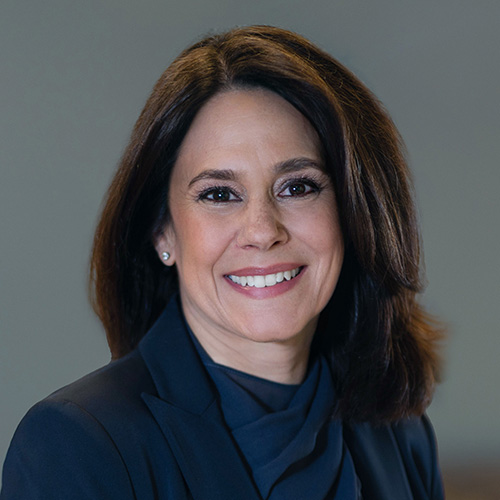
Lorie Logan is president and CEO of the Federal Reserve Bank of Dallas.
The views expressed are my own and do not necessarily reflect official positions of the Federal Reserve System.