Welcome remarks for the Fifth Annual Workshop on the Macroeconomic Implications of Migration
Thank you for the introduction, Santiago [Pérez].
Welcome to the Federal Reserve Bank of Dallas. We serve the Eleventh Federal Reserve District, encompassing the state of Texas, northern Louisiana and southern New Mexico. Our district’s location, which includes over a thousand miles of the U.S.–Mexico border, gives us unique insight into how migration shapes economic outcomes at both the regional and national levels.
When I first visited El Paso a few years ago, I saw firsthand how intertwined the communities on both sides of the border are. Business owners told me their customers cross the bridge every day to shop with them. I sat in the rush-hour traffic as workers headed back over the border to go home—a daily commute thousands make in both directions. And I witnessed just how much of our economy moved through those ports of entry each way, every day—workers, consumers, trucks and trade. The border puts these dynamics in plain view, but migration shapes economies far beyond the border.
Here at the Dallas Fed, our location, direct insight and regional expertise position us to be a leader in migration research. This work is a priority for us. We share our research publicly—through academic journals, presentations across the district, on our website and through workshops like this one. Our team, Xiaoqing [Zhou] and Pia [Orrenius] in particular, regularly contribute to the dialogue on migration. We’re excited to build on this involvement and to host this year’s event.
U.S. immigration policy has undergone significant change over the last several years, with long-term implications for labor and housing markets, entrepreneurship, innovation and overall economic growth. Our nation is not the only one experiencing the effects of these policies. Immigration trends shape economies around the world by influencing remittance flows, trade patterns and labor markets across borders. Understanding these effects is essential as policymakers and business leaders make decisions that will shape our economies for years to come.
Over the next two days, we’ll explore several issues relevant to our work. This includes how both the postpandemic migration boom and the subsequent immigration restrictions influenced price stability and labor market dynamics directly relating to our monetary policy responsibilities. We’ll discuss the role of remittances and other cross-border payments, including innovations in technology, which impact how our payment and settlement systems work. And we'll touch on the role immigrants play in communities, including their local integration and their economic opportunities and barriers, which touches on the Fed's community development function.
The dialogue will extend beyond these core responsibilities. Business leaders can apply the analysis we develop to inform their outlook as they consider workforce and investment decisions. Policymakers can draw on these insights to understand the full economic implications of their decisions. And researchers can use this opportunity to connect with colleagues, exchange ideas and identify new research questions to advance the collective understanding of migration’s role in the economy.
We are proud to host this conference, which reflects the Fed’s commitment to independent research rooted in regional expertise.
Value of independent research
In my view, the Federal Reserve System's unique structure is one of our greatest strengths. We are not a single, centralized institution based in Washington. Instead, when the Fed was established over a hundred years ago, Congress recognized the value of a federated structure made up of 12 regional Reserve Banks spread across the country, each with deep roots in its local community. This decentralized design allows us to best serve the public by engaging with the businesses, industries and communities that make up these districts. We gather on-the-ground insights that better reflect the regions we represent. And each Reserve Bank conducts independent research informed by its district’s unique economy.
At the Dallas Fed, we’ve developed deep expertise in the areas that matter most to our district’s economy—including immigration, energy, international trade and, of course, the U.S.–Mexico relationship.
This regional expertise serves a critical function in the Fed’s monetary policy process. At Federal Open Market Committee (FOMC) meetings, I share Dallas Fed research with other FOMC participants as we determine the path of monetary policy. Sharing this work brings regional context and specialized expertise to the national discussion, better informing the decision-making that occurs at each monetary policy meeting.
Good monetary policy depends on well-executed research. Research provides policymakers with a foundational understanding of the factors shaping the current economic environment and an idea of where the economy may be headed. Our economy is complex, and specialized research is essential for understanding the economy as a whole. No single institution can generate all the insights needed to navigate this complexity, which is why central banks regularly engage with the broader research community.
This conference is a testament to the value of independent research. The research discussed here is strengthened through dialogue with academic institutions, policy organizations and other central banks.
Regional perspective
For the Dallas Fed, migration research is a priority and a natural extension of our regional expertise. Migration has been a key driver of the Eleventh District's economic growth. Our region attracts talent from around the world, with direct effects on our labor markets, trade flows and financial channels. These inflows have also been key to the diversification of the regional economy.
Understanding these dynamics requires thorough analysis and real-world perspectives. In addition to published research, we study migration dynamics through direct engagement with those who know it best. One example is our El Paso branch, the only Federal Reserve location directly on the southern border. Our team in El Paso regularly engages with local leaders through cross-border roundtables, outreach calls and speaking engagements. These interactions, combined with our team’s own experience living and working on the border, provide us with real-time insights into the local impact of policy changes.
This engagement extends well beyond the border region. We collaborate regularly with Banco de México and other central banks to better understand the economic implications of migration on a global scale. This includes research on remittances, labor mobility, trade and international capital flows. These partnerships give us access to data, expertise and perspectives that are essential to better understanding migration’s role in the economy.
Conference preview
Over the next two days, we'll deepen our understanding of the macroeconomic implications of migration. From labor market impacts to innovation, from price effects to financial stability, our agenda addresses issues that matter deeply for academics, economists and policymakers.
Thank you to everyone involved in organizing this important gathering. And thank you all for being here. I look forward to the dialogue and the insights you share.
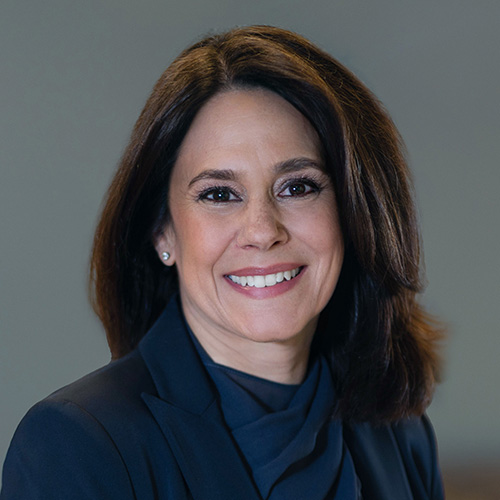
Lorie Logan is president and CEO of the Federal Reserve Bank of Dallas.
The views expressed are my own and do not necessarily reflect official positions of the Federal Reserve System.