Remarks before the University of North Texas College of Business Administration
Congratulations, and thanks to the honorees for your contributions to the business school. Education is certainly the choke point of our new, competitive global economy, which, in turn, has increased the premium on higher education.The University of North Texas appears well situated to play a leading role in this new economy, lying as it does in the Silicon Prairie, just up the pike—the NAFTA superhighway—from the Telecom Corridor, the communications technology center of the world. As they say—location, location, location.
The press has labeled me a cheerleader for what we at the Dallas Fed call our New Paradigm Economy. That's true. That's accurate. If you want details, look up our latest annual report and various articles and speeches on our web site, at www. dallasfed.org. It's not your father's web site. But then, it's not your father's economy either.
By the way, the New Economy reached an important milestone last month: It finally came to country music. On the Country Music Awards show in early October, Alan Jackson sang a song in which he told his estranged girlfriend she could reach him at www.memory, where he'd be waiting patiently. All she had to do was move her little mouse and click on him. Is this a great country or what?
Of course, the Dixie Chicks walked away with several awards—rightfully so. With North Texas' reputation as a premier university for music, all of you were probably watching the awards show yourselves.
But, I digress. Back to our annual report on the New Paradigm Economy. As I say there, "paradigm" is a pretty fancy word for a country boy. So I illustrate what I mean by it with the familiar recipe for boiling a frog. You've heard it before. To boil a frog, you don't just drop him in boiling water. He'll jump right out. Instead, you drop him in cold water and gradually raise the heat. The frog doesn't jump out because he doesn't realize his paradigm is shifting.
Our economy's paradigm has been shifting and, like the frog, many of us didn't appreciate its significance or policy implications for a long time because the shift was gradual. We were too close to the trees to see the forest.
Any foresight I might have had in that regard had less to do with insight than eyesight. Thankfully, though, it wasn't hindsight. What I mean by emphasizing eyesight over insight was stated well by Yogi Berra when he allegedly said, "You can observe a lot just by watching" and by comedian Richard Pryor when he asked, "Who are you going to believe? Me or your own lying eyes?"
Usually, seeing is believing. Sometimes, though, you have to believe before you can see. Especially if you have a large intellectual investment in the old paradigm.
I frequently call Yogi Berra and Richard Pryor my favorite economists because they look at the real world. Recently, a Dow Jones writer did a very nice piece on me in his capital markets report, very flattering. But there was a small fly in the ointment. He said that by citing Yogi Berra and Richard Pryor I sound more like Luke Duke than Alan Greenspan. This audience looks old enough to remember Bo and Luke Duke of the Dukes of Hazzard and their sister, Daisy Duke.
As you can imagine, I've given the Luke Duke thing a lot of thought. Of course, it's true. I do sound more like Luke Duke than Alan Greenspan. But then, so does everyone else on the planet.
Lots of people call the way Chairman Greenspan talks "Fedspeak." I call it "Greenspeak." My favorite example of Greenspeak appeared in a cartoon a couple of years ago. The pillars of the global economy overhead were cracking and beginning to fall. Down below was a creature with a chicken's body and Chairman Greenspan's head—obviously Chicken Little. But instead of saying, "The sky is falling! The sky is falling!" this chicken was saying, "The sky is measurably weakened. The sky is measurably weakened."
We do have a new economy. That doesn't mean the old economy ended one day and the new one began the next. Think in terms of Alvin Toffler's book The Third Wave. The waves are overlapping. The first wave was the agricultural revolution. The second wave was the industrial revolution. Toffler calls his third wave the information revolution.
The industrial era was ushered in by inventions that augmented muscle power and made physical work easier—the steam engine, railroad, gasoline motor and, especially, electricity. The Information Age began with the microprocessor, the tiny computer chip that augments brainpower. As Yogi Berra said about baseball, half of the New Economy is 90 percent mental.
As you know, Jack Kilby, of Texas Instruments in Dallas, just received the Nobel Prize in physics for inventing the microprocessor that spawned the information revolution. If "plastics" was the word for graduates in the 1960s, "silicon" was the word in the 1990s—silicon as in chips. Of course, the Internet is where most of the action is today.
When I talk about the role of high tech in the New Economy, I usually mean high electronic tech. More specifically, information and communications technology. That's what's given a big boost to growth and helped put a damper on inflation. But in passing and for the record, let me say that biotechnology is likely to be bigger and even more important than information and communications technology. More important to our standard of living and quality of life, but not necessarily more important to economic growth the way we measure it today. The prevention and cure of diseases will likely generate less GDP than the diseases would. Shorter hospital stays may generate less GDP than longer stays, even when alternative uses of the freed resources are taken into account.
The miracles being wrought with biotech—especially those that will result from the Human Genome Project—always remind me of Eubie Blake's comment as an old man. He said if he'd known he was going to live that long, he would have taken better care of himself. That's truer today than ever before. If we can just stay healthy a few more years, we may live forever. Biotech is already creating new medicines to grow hair on your head, put lead in your pencil and cure cancer in mice. Dolly, the first cloned sheep, seems like ancient history already. I understand they're making mice on the production line.
Toffler's Third Wave information economy has been gathering momentum for a long time. We've had an accelerating flow of inventions, innovations and process improvements. We almost have what I call "invention on demand." By that I mean, "We have it in analog form; let's make it digital—by next year" and "It's digital now; let's make it wireless—by next year."
No longer do we wait for an unknown tinkerer in his garage to come up with the new, new thing. They're still doing so, to be sure. But in addition to that, we have research and development going on throughout the economy on a continuous basis. Some of the scientists and engineers are working on my next toy. Some are working on the prevention or cure of the disease you and I would otherwise die from.
The Internet, which is changing everything, has been around a few years, but not for most of us. Most of us were waiting on search engines and the World Wide Web, products of the '90s. We didn't know that's what we were waiting for, but it was. A couple of years ago, John Templeton wrote a book titled Is Progress Speeding Up? The answer was yes then, and it still is. Even the second derivative of progress is speeding up.
Even though the Third Wave information economy is part of the New Economy, that's not what I mean by the term. Let's look at a little historical context. According to the National Bureau of Economic Research, the last national recession began in August 1990 and bottomed out in March 1991, eight months later. The current expansion began in April 1991. Last February, it became the longest on record. That eight-month recession in '90-'91 was the only national recession since November 1982—18 years ago. Eight months of recession in 18 years.
From the 1850s to the 1950s, I'm told, we were in recession 40 percent of the time. For every three steps forward, we took two steps back. We've come a long way. But I don't claim we've eliminated the business cycle. No one does. That's not part of my New Economy story. But our recessions are fewer, milder and shorter. And we've never had one start on my watch! J
You'll recall that the recovery from the last recession was sluggish at first, especially in job growth. The term jobless recovery was heard. Part of that was the legacy of the S&L and banking crisis in previous years. Lenders were reluctant to lend, and borrowers were reluctant to borrow. The credit crunch and several other factors constituted what we called 50 mph headwinds.
Pushing against those headwinds to get the economy moving again, the Fed put the pedal to the metal and pushed short-term interest rates down to 3 percent, where they remained for more than a year. That not only got the economy back in gear, it helped heal the balance sheets of financial institutions. By early 1994, the economy's vigor had returned. So we allowed short-term interest rates to rise back to more normal levels.
1992 was a pretty good year, but perceptions lagged reality. People didn't believe it. '93 was better. '94 came on like gangbusters. The preemptive tightening during '94 weakened '95 a bit. But by late '95, the economy began accelerating. That is unusual, several years into an expansion. Beginning in late '95 and continuing in '96, '97, '98, '99 and at least through the middle of this year, output grew rapidly, employment grew rapidly, the unemployment rate kept falling to 30-year lows and inflation—up until about a year ago—continued to fall.
The stretch after 1995 is the New Paradigm, or New Economy, period that I refer to—the second half of the 1990s. New Economy naysayers like to average all of the 1990s together, which dilutes the performance in the second half of the decade.
In the period since 1995, real GDP growth has averaged more than 4 percent per year—well above the previous presumed noninflationary speed limit of 2 to 2.5 percent. The unemployment rate, which most economists thought couldn't go below 6 percent without causing inflation to accelerate, gradually fell to its present level of 3.9 percent. During most of this period, inflation continued to decline.
Of course, the speedup in growth and declining unemployment had collateral benefits. Poverty was reduced, welfare reform was made easier, minority unemployment hit all-time lows, crime went down and, presumably, health improved. The budget deficit turned into a surplus. In short, the economy got its mojo back, Stella got her groove back and Rosie got her scenario back. Rosie's scenario finally came true!
Over the past year we have had some inflation creep, but so far, most of it has been in oil and gas. Yesterday, for example, we learned that the Producer Price Index for October increased 0.4 percent—not good. But the core PPI, which excludes food and energy, declined 0.1 percent. While most of the backsliding on inflation recently has been in oil and gas, not all of it has.
As you know, the Fed has responded to the renewed inflationary threat with a series of small increases in the target federal funds rate. Between June 1999 and May 2000, the cumulative increase in the Fed funds rate was 1.75 percent. Most longer term rates have risen less than that because inflation expectations have remained contained and, to some extent, because of the declining federal deficit and Treasury buybacks of longer term Treasury securities. Interestingly, mortgage rates have actually declined in recent months, supporting the housing industry.On the other hand, in recent weeks there has been some widening of the premiums of junk bonds over Treasuries and high-grade corporate securities. The Fed's most recent tightening move came in May of this year. We held pat in the three meetings since then, although our press releases suggested that we still viewed the threat of higher inflation as greater than the threat of economic weakness.
Please understand that I'm talking history here. I cannot speculate on what might or might not happen next week—even if I knew. There are no implications whatsoever for next week.
Going back to the second half of the 1990s, the rise in outputgrowth and the decline in unemployment presented monetary policy with quite a challenge. Both were moving into ranges that had caused inflation to accelerate in the past. Econometric models programmed with the relationships that prevailed in the '70s and '80s were giving off warning signals. Many Fed watchers and policy wonks thought we were making a mistake not to tighten preemptively. The economics establishment thought we were getting behind the curve—especially well-known, highly respected economists at elite universities that don't have good football teams.
We had a dilemma. Do you look to the models? Do you rely on past relationships and proven rules of thumb? Or do you risk getting behind the curve by waiting for the inflation to actually show up in the economy? Do you rely on insight or eyesight? Hindsight comes too late. As it turned out, we waited a fairly long time, until June 30, 1999.
The public record shows three dissents on the FOMC for tightening in 1996 and three in 1997. Then the Asian crisis put things on hold. Its impact on us was uncertain. It turned out to be fairly benign until the Russian default of October 1998, which adversely affected our financial markets. That's when, in the fall of 1998, we ended up easing monetary policy with three small easing moves. The pressure to tighten, of course, resumed after the Asian economies showed a faster-than-expected recovery in 1999.
While I would have waited a bit longer, the FOMC successfully tested the growth limits of the New Economy and gave growth a chance. Whether smart or lucky, forbearance proved successful and allowed our new economy to blossom.
We now know that the key to the New Economy was an acceleration of productivity growth resulting from the boom in investment in new technology. We don't know why the flow of new technology took so long to show up in the productivity statistics, but it finallydid.
Productivity growth is extremely important because it's a good proxy for increases in our standard of living. It's nice to produce more because you have more workers or because they are working more hours. But it's much better to produce more, on average, for each hour worked. That's how productivity is defined: output per hour worked.
From the early '70s to the early '90s, productivity grew just over 1 percent per year. Since the number of hours worked grew just over 1 percent a year, the inflation-safe speed limit was presumed to be 2 to 2.5 percent. Policymakers and economists alike came to regard that 2 to 2.5 percent speed limit as a constant and focused almost exclusively on holding demand growth down to that level.
The focus was on Keynes' law (demand creates its own supply), rather than Say's law from classical economics (supply creates its own demand). But much happened during the '90s that raised the growth potential of our economy—potential supply. I'll list just a few:
- The collapse of communism and hard-core socialism.
- The movement of many countries into the market economy.
- Privatizations all over the world.
- Deregulation all over the world.
- Freer trade.
- Freer investment flows.
- Better fiscal policy.
- Better monetary policy.
The contribution of monetary policy was to gradually reduce inflation to very low levels, so that inflation ceased to be a significant factor in business decisions. In the inflationary '70s, if your profit margins were squeezed, you raised prices. Your competitors would go along. In the disinflationary '90s, you didn't have that option. A competitor, somewhere in the world, would eat your lunch. That has only intensified with the Internet. The competitive New Economy is wonderful for consumers. It's hell on producers. Consumers get to participate; producers have to.
When labor markets became tight, as they did several years ago, some say we were lucky that productivity rose to offset the higher labor costs. I say there was more cause and effect than that. Necessity being the mother of invention, scarce labor forced firms to invest in labor-saving technology that raised productivity—that leveraged labor more.
The policy implications of the new paradigm were simple. If you don't know what the speed limits are, if you don't know how fast you can grow without inflation, or how low the unemployment rate can go without accelerating inflation, then you don't use those real variables as triggers for monetary policy. If your gauges and dials are broken, you have to look out the window. If you can't trust the models of the economy, watch the economy itself.
Under such circumstances, using market-based indicators becomes more important than ever. The best place to look for inflation is in the inflation statistics and in the leading financial and market indicators of inflation—inflation at the spigot and inflation in the pipeline. Such pipeline indicators might be commodity prices, including gold, the strength of the dollar in foreign exchange markets, the growth in the money supply, the relationship of various interest rates in terms of both maturity and risk.
My methodology last year was this: I would see what the models said. Since they always seemed to underestimate growth and overestimate inflation, I would subtract about a half point from the inflation projection and add it to the growth projection. Then I would factor in the difficulty of getting a parking place at D/FW to go to the FOMC meeting and getting a cab at Reagan National when I got there. Only then would the thickness of Alan Greenspan's briefcase that morning come into play. (What does he have in that thing, anyway?)
As Elvis would say if he were here—and who's to say he's not—thank you. Thank you very much.
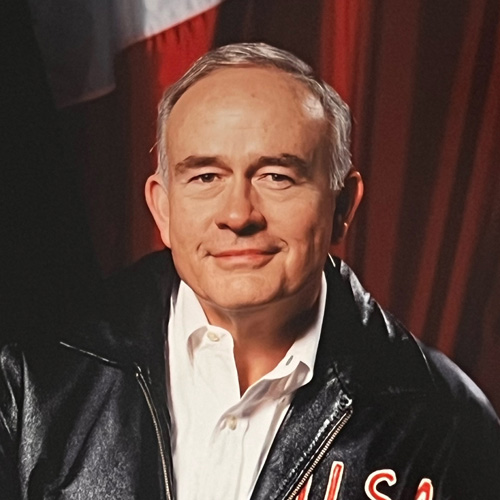
Robert D. McTeer Jr. was president and CEO of the Federal Reserve Bank of Dallas from 1991 to 2004.
The views expressed are my own and do not necessarily reflect official positions of the Federal Reserve System.