Remarks on inflation, employment and monetary policy
Good morning. Thank you, Daron [Peschel], for that kind introduction. And welcome, everyone, to the Dallas Fed’s Houston branch. I’m looking forward to my conversation with Dr. Margaret Ford Fisher, chancellor of Houston City College, in just a few minutes.
As I travel through the Dallas Fed’s district, I talk extensively with workers, bankers, business executives and community leaders, just as we’re doing here today. These dialogues matter for two reasons.
First, they provide nuanced, up-to-date information. I’m grateful to everyone who takes time to talk. Your perspectives help me learn how people are experiencing the economy. You teach me how national policy decisions reverberate here in Texas. And you show me what trends are on the horizon. Aggregate macroeconomic statistics can be highly informative, but there’s no substitute for on-the-ground insight.
Second, public dialogue lets you hold me accountable for serving you well. The Fed is an independent central bank. Independence means monetary policy decisions focus on the long term. We are still accountable to the American people. The Fed reports regularly to Congress. Community leaders on the board of directors at each Federal Reserve Bank select and evaluate its management. And in conversations like this one, you get to tell us how we’re doing. Through all those engagements, we expect and need the public to hold us to account for fulfilling the important mission you’ve trusted us with.
The Federal Open Market Committee (FOMC) sets monetary policy to achieve two goals: maximum employment and stable prices. Congress assigned us those goals. We pursue both with vigor and focus. Everyone who wants to find work should be able to do so. Households and businesses should be able to count on low inflation so they can make ends meet today and plan for a prosperous future.
In the long run, the FOMC’s two goals are complementary. They work in concert to support a strong and growing American economy.
Today, I’d like to tell you why I currently believe modestly higher interest rates would better balance the outlook and risks for the FOMC’s dual mandate goals. These are my views and, let me emphasize, not necessarily those of my FOMC colleagues.
The FOMC targets a 2 percent inflation rate as measured by the price index for personal consumption expenditures, or PCE. Inflation has exceeded that target for more than five years. Over the 12 months through May, the most recent data available, the PCE inflation rate was 4.1 percent. Every month of above-target inflation has compounded the strain on Americans’ budgets: another month of expensive grocery bills for parents feeding their families, another month of rising input costs for companies, another month of unexpected expenses for nonprofit organizations and local governments serving our communities.
Another metric, the Consumer Price Index (CPI), showed this week that the one-month inflation rate eased in June. But one month of relief is not enough. It is time to finish the job of restoring price stability.
Now, the fact that inflation has been high for a long time, or that it dipped last month, doesn’t determine what monetary policy needs to do now. Policy takes time to work its way through the economy. What matters is where inflation is headed from here. In monetary policy as in hockey, you have to skate where the puck is going.
Unfortunately, inflation does not appear to be headed sustainably back all the way to 2 percent.
To see this, it’s necessary to take a longer-term view and look through short-run movements in particular prices. Developments such as tariffs and conflict in the Middle East have raised inflation over the past 15 months. As those shocks fade, inflation will come down somewhat. Indeed, the reopening of the Strait of Hormuz temporarily caused some energy prices to drop rapidly, which contributed to the decrease in the June CPI. The situation in the Persian Gulf is fluid, and the near-term outlook for energy prices is uncertain. But energy prices will eventually stabilize at some level. At that point, what will matter is the broader trend in prices.
There is no single perfect way to measure where inflation is headed. I combine many methods, each with its strengths and weaknesses, to build up the picture.
One group of methods relies on statistical models. Metrics that filter out volatile categories or unusual price swings can give a better read on where overall inflation is likely to go. The Dallas Fed Trimmed Mean PCE inflation rate, for example, sets aside the most extreme price changes each month. It stands at 2.4 percent for the 12 months through May and should tick down slightly when the June data are incorporated at the end of this month. My staff’s research finds, though, that a change in the mix of price increases and decreases is causing the trimmed mean to drop too many increases right now. This effect likely makes the trimmed mean lower than the true inflation trend.
Indeed, other measures are higher than the trimmed mean. Core PCE inflation sets aside volatile food and energy prices. It’s 3.4 percent and has risen four-tenths of a percent since December. The New York Fed’s multivariate core trend model also estimates the persistent component of inflation at 3.4 percent right now. It’s hovered around 3 percent for three years.
Dallas Fed researchers have estimated how much tariffs, energy prices and mismeasurement of inflation for computer software and accessories are contributing to these measures. Those adjustments bring the numbers down a bit, but not all the way to 2 percent.
Another approach looks at specific inflation categories where temporary distortions are relatively small. Currently, one such category is inflation for market-based non-housing core services. Tariffs on manufactured goods don’t directly affect it. Neither do energy and food prices, the normalization of rents after the pandemic, or stock market fluctuations that change portfolio management fees. But the message here is much the same as with the statistical models. Market-based non-housing core services inflation slowed to near 3 percent in mid-2024. On a 12-month basis, it has made no progress since. In fact, it picked up a bit this spring, even after adjusting for the pass-through of higher fuel prices into services such as airfares.
Labor is the main input for services businesses, so services inflation and wage growth historically track each other closely. The signal that wages send for inflation also depends on workers’ productivity. Wage growth has been subdued enough that, adjusted for productivity, it is roughly consistent with 2 percent inflation. It’s tempting to call this good news for the inflation outlook. But because actual inflation has been well above 2 percent, it is not good news for workers. It means earnings aren’t keeping pace with the cost of living, and workers are getting a smaller share of the output they produce.
Mathematically, there are three ways a gap between inflation and productivity-adjusted wage growth can play out. Inflation can come down to match wages. Workers can persuade their bosses to give raises, and wages will rise to match inflation. Or workers’ share of income can fall, as it has for most of this century, and the gap between wages and inflation can hold steady.
It would be helpful for the Fed’s inflation goal if price growth came down in line with wage growth. But that hasn’t yet happened in a sustained way. And business contacts are starting to report the opposite. CEOs at a few Texas companies have told me they are raising workers’ pay to help them manage a higher cost of living. The Dallas Fed’s latest Texas Business Outlook Surveys also show a pickup in actual and projected wage growth.
Strong consumer spending, soaring corporate profits, accommodative financial conditions and AI investment continue to drive economic activity. Equity prices are up 20 percent over the past year. Credit spreads are close to the tightest they’ve ever been. These financial conditions reflect investors’ optimism about the American economy, and they fuel consumption, especially by wealthier households.
AI and other new technologies may eventually generate a surge in productivity and allow the economy to supply more goods and services. But the potential size and timing of those gains are uncertain. The demand effects are here already. And when demand outstrips supply, the result is higher prices.
The June CPI data do suggest the possibility of a more hopeful scenario where inflation returns all the way to target. Besides the sharp decline in energy prices, core goods prices fell as the effects of tariffs receded. Non-housing core services prices were surprisingly soft, and housing costs moderated. If the trends in housing and non-housing services continue, overall inflation could fall further. Still, that path is tenuous. It relies on avoiding further price pressures from energy shocks in the near term and from strengthening demand in the medium term. For now, it is more a hope than a likelihood.
Putting together all these ways of looking at the data and economy, my best judgment is that inflation appears to be heading toward the mid 2’s—not all the way back to 2 percent.
The monetary policy response to that situation must also consider the FOMC’s other goal, maximum employment. On this dimension, from a monetary policy perspective, the economy is performing solidly. The unemployment rate averaged 4.3 percent in the first half of this year. That is about the same as a year earlier and near most estimates of the lowest sustainable level. Employers added an average of 92,000 jobs per month in the first half of this year, modestly outpacing growth in the size of the labor force. Overall, the labor market is well balanced and perhaps even strengthening a bit.
To be sure, many workers face meaningful challenges. Amid the uncertainties of rapid technological change, companies are both slow to fire and slow to hire. That dynamic is keeping the labor market in balance, but it’s cold comfort for anyone who needs to find a new job. New technologies and changing trade patterns are also increasing the demand for some skills and decreasing the demand for others. These are real difficulties, but not ones that easier monetary policy can fix.
The labor, consumption and financial data indicate that monetary policy is not restraining the economy. And that’s a problem for sustainably achieving the FOMC’s inflation goal. If inflation is not heading all the way to 2 percent on its own, then at least some policy restriction is needed to help get it there.
Moreover, the FOMC has committed to taking a balanced approach to its two goals. In my view, we should not perpetually achieve one goal while missing the other. History shows that when central banks try to hold down unemployment by accepting persistent inflation, they often end up with more inflation and more unemployment. If higher inflation becomes entrenched, we’d need sharper rate increases to bring it back to target, with a larger cost for the labor market. Better modest restriction now than severe restriction later.
Appropriate monetary policy also accounts for risks to the FOMC’s dual mandate goals. The economy can always surprise in either direction. But downside risks to employment have faded after drawing focus last year. And the inflation risks are mainly to the upside.
Conflict in the Middle East reignited over the weekend and pushed up the price of oil. Even if commodity shipments resume soon, business contacts tell me consumer price pressures could last longer. Capacity constraints at refineries will lift fuel prices regardless of global oil supply. Industries like airlines that are seeing strong demand may not rush to take back recent price increases.
And, looking beyond geopolitics, the AI investment surge could trigger nonlinear price increases. That’s happening already in a few narrow categories, as you know if you’ve had occasion to buy computer chips recently. The risk is that the pressures broaden as AI demand touches construction, power generation and other sectors.
To sum up, inflation has been too high, for too long, and does not appear to be on track all the way back to 2 percent. And the inflation risks are to the upside. The labor market, meanwhile, is solid. Without any policy restraint, these conditions are likely to continue until there’s an unanticipated shock. So, I currently believe modestly higher interest rates would better balance the outlook and risks for the FOMC’s maximum employment and price stability goals. Of course, the economy is dynamic, and more data arrive nearly every day. If the outlook changes, I will update my policy views accordingly.
So that’s how I see the economy right now. But let me add one last point.
Neither I nor any other single person makes monetary policy on their own in the United States. The Federal Open Market Committee is a committee. All seven governors of the Federal Reserve Board and all 12 presidents of the Federal Reserve Banks participate in the discussion, and 12 of those 19 people have a vote at any given time. When I go to the next FOMC meeting in a week and a half, I’ll bring my best evidence, analysis and arguments about what we should do. I’ll also listen carefully to my colleagues’ evidence, analysis and arguments. I may persuade them, they may persuade me, we may agree to disagree, or, more likely, we’ll all adjust our thinking as we take in new perspectives. By putting together information and ideas from across the country, we gain deeper insight into the economy and make better decisions to serve the public.
Thank you.
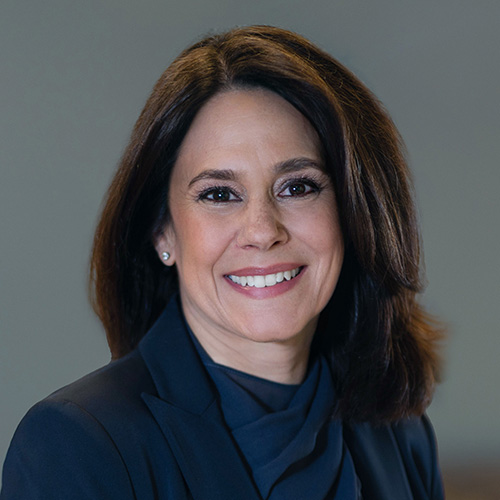
Lorie Logan is president and CEO of the Federal Reserve Bank of Dallas.
The views expressed are my own and do not necessarily reflect official positions of the Federal Reserve System.