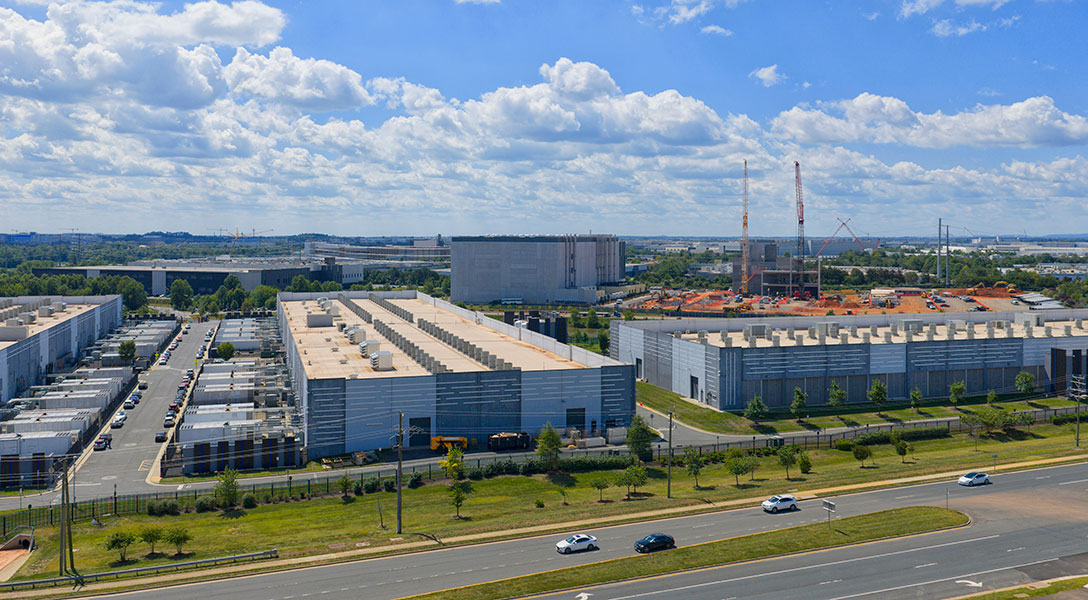
Permian Basin industries compete for resources
The Permian Basin knows oil booms, but this time is different. Energy companies are competing not just with each other, but also with data center developers for the resources to expand.
On a visit to the Texas and New Mexico sides of the Permian Basin, Dallas Fed President Lorie Logan heard about intense demand for labor, infrastructure, equipment, housing, water, even sand. She also heard from community leaders determined to grow their own workforce through education, from elementary school to postsecondary to training for career change.
The trip was part of President Logan’s Listening in 360 series of visits around the Eleventh Federal Reserve District. She heard from leaders in the oil industry as well as executives with a nuclear fuel company, bankers, small business owners and other community leaders working in or near the basin that provides 60 percent of the country’s oil. Conversations like these give her a real-time sense of how people are experiencing the regional economy and help her develop her views on monetary policy.
New Mexico develops nuclear fuel hub
This is the room where the magic happens, according to the URENCO Global executive who led a tour of the uranium enrichment facility in Eunice, N.M., for President Logan and her team. The warehouse-like buildings house hundreds of thousands of shiny steel pipes, each about two stories high and as wide as a stack of pancakes, whining and whirring as they process uranium for nuclear fuel.
URENCO operates the only large-scale uranium enrichment facility in North America and supplies about a third of the material for U.S. nuclear power plants. Company leaders anticipate demand for enriched uranium increasing as U.S. power companies contemplate a new generation of modular nuclear power plants. URENCO is planning a $3.8 billion expansion to the existing $5 billion New Mexico facility.
The enriched uranium goes into barrels for transport to customers who will turn the material into fuel rods for power plants. Fill a 5,000-pound barrel with the enriched uranium, and it weighs about 30,000 pounds, so heavy that a tractor-trailer can only carry one barrel at a time. If other companies in the nuclear fuel supply chain build in the area, as economic development leaders anticipate, those trucks may not have to travel far. The federal government’s Waste Isolation Pilot Plant radioactive waste storage facility is also nearby.
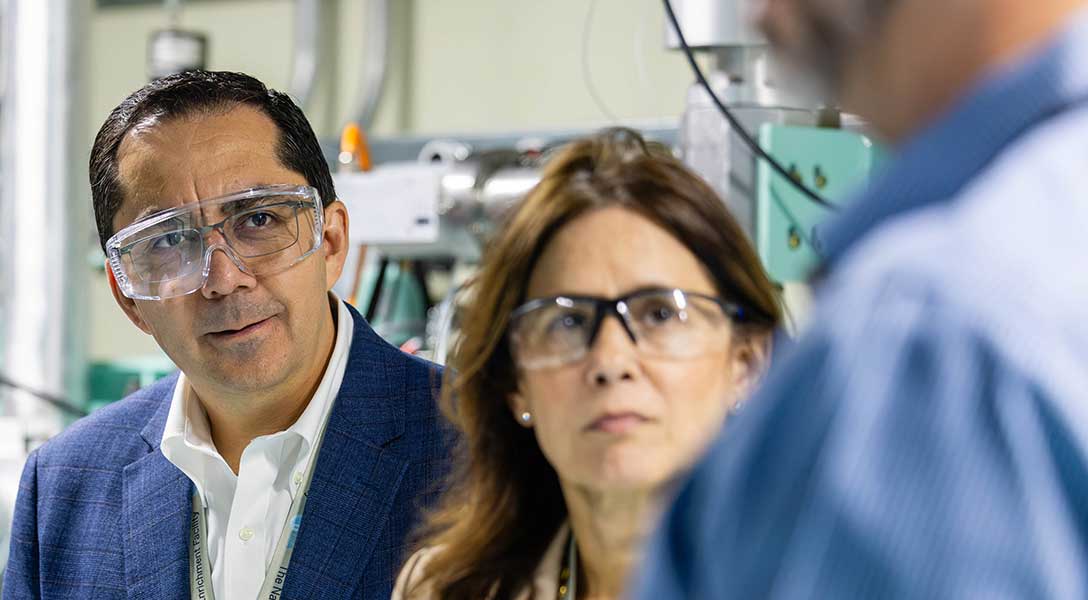
President Logan and Senior Vice President Roberto Coronado tour URENCO.
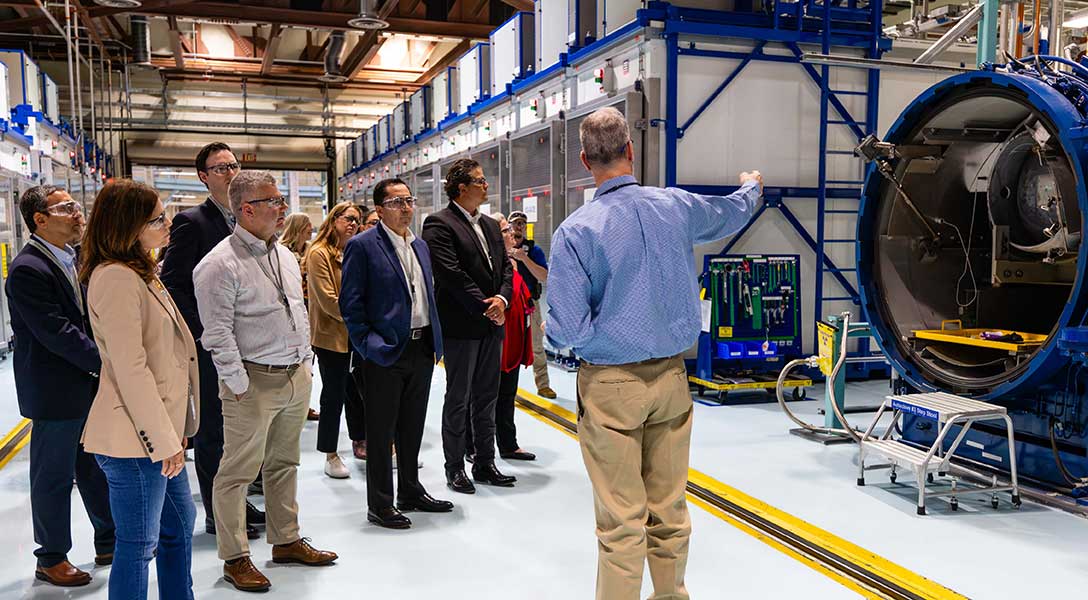
A URENCO executive explains the process of enriching uranium for power plant fuel.
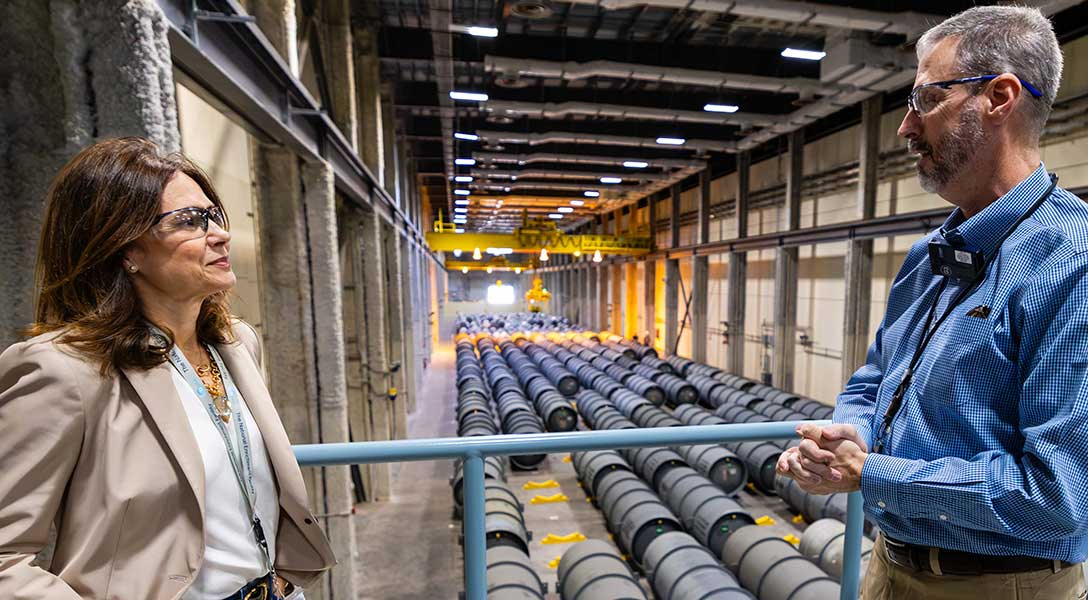
Enriched uranium is transported in barrels via truck from URENCO's plant to customers.
Dallas Fed President Lorie Logan's visit to the Permian Basin included a tour of the URENCO uranium-enrichment plant in Eunice, N.M.
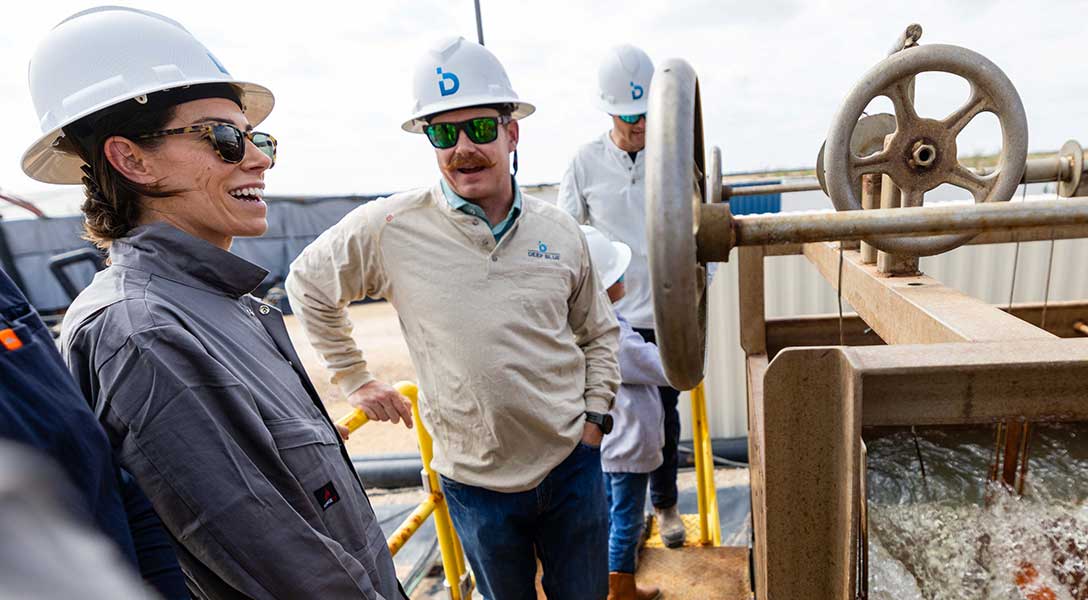
Dallas Fed leaders learn how Deep Blue cleans produced water, a byproduct of oil drilling.
Oil and gas industry, data centers compete for resources
Oil companies in the Permian Basin have grappled with growth constraints through many boom cycles. This time is more intense. Oil and fuel prices are high and production is rising, but industry leaders said the advent of data center construction has significantly boosted the costs of labor, infrastructure and materials. With no guarantee that oil prices will remain high, it’s difficult to determine how much to invest in expansion.
One executive said: “We’d love to spend more capital, but the constraints are real.”
A key resource both industries must manage is water. Industrial plants need water for cooling, and oil producers need water for drilling. In a visit to a drilling site, Dallas Fed leaders heard from executives with water services company Deep Blue. The company provides water for drilling and collects water extracted from the ground as a byproduct of oil production. The water is cleaned, stored for reuse or disposed underground.
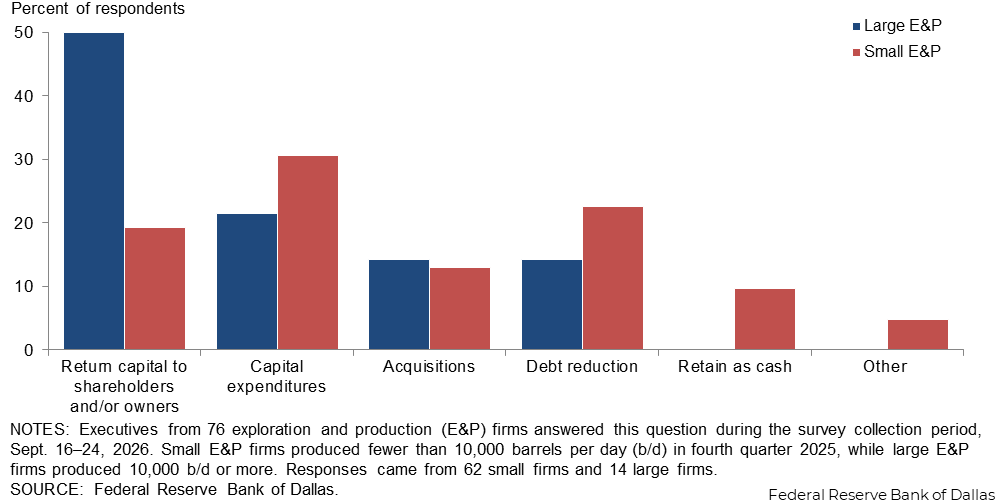
Where do oil producers expect to allocate cash?
The Dallas Fed's quarterly energy survey asked executives with exploration and production firms in Texas, northern Louisiana and southern New Mexico about : Free cash flow for many exploration and production firms increased in the first three quarters of 2026 compared to the first three quarters of 2025. Where do you primarily expect your firm to allocate this additional cash flow in the coming quarters?
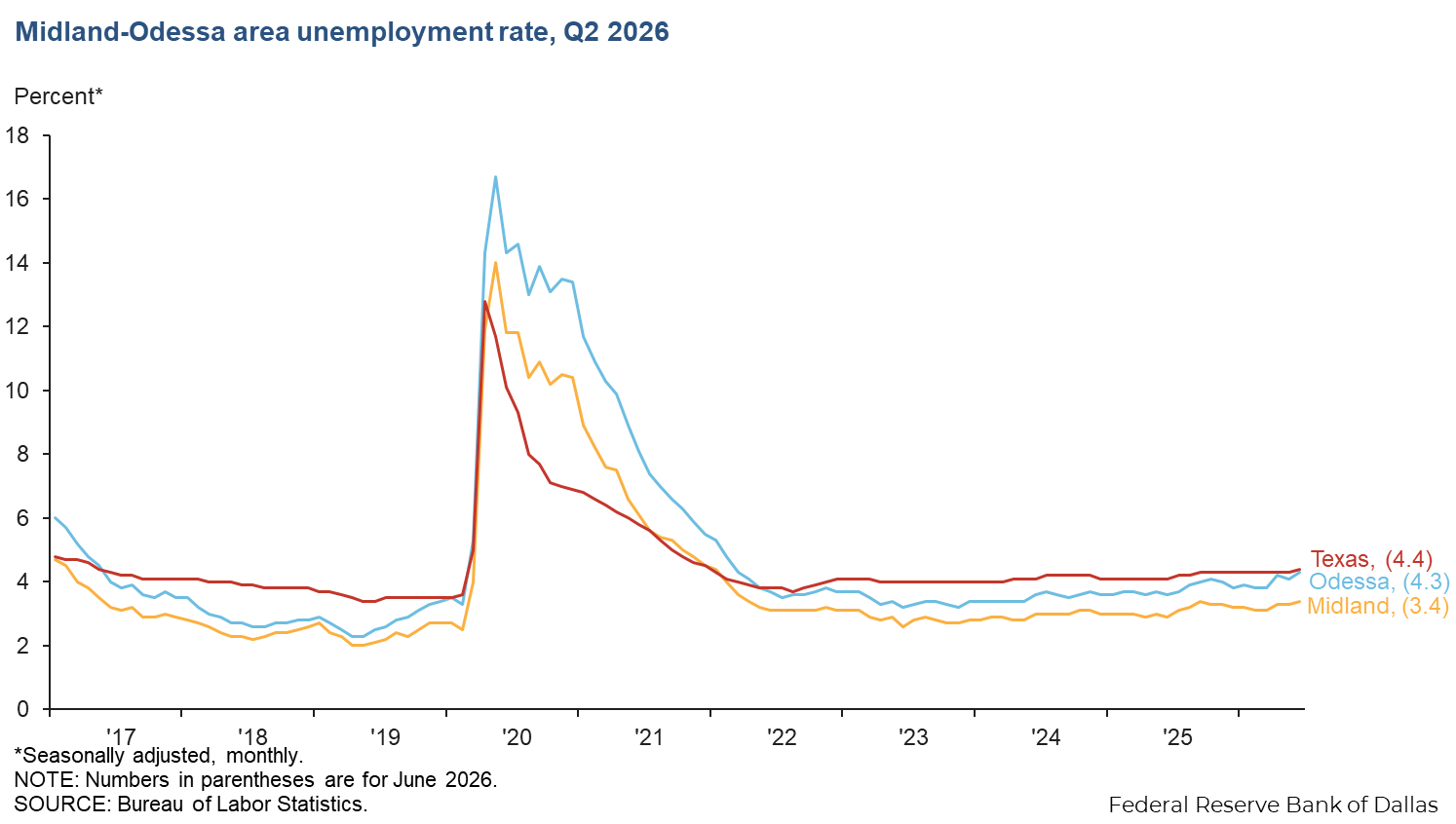
Permian communities aim to cultivate regional workforce
The Permian Basin serves as a laboratory for comparing local policies in Texas and New Mexico. Lack of private land in New Mexico constrains housing growth, some local leaders told President Logan, but higher property taxes in Texas can make New Mexico more attractive to some workers. What cuts across the basin is an interest in collaborating to build a workforce pipeline.
The competition between oil producers and data centers for workers can create obstacles to staffing other types of companies, business leaders told President Logan. That leaves some communities with large short-term populations and a lack of retail and housing to support them, creating what one community leader called “a very hard chicken-before-the-egg” situation.
In southern New Mexico, leaders are collaborating on what several people called a “grow-your-own” strategy for workforce development. Years ago, URENCO created a fifth-grade science curriculum, and now about a dozen of those former fifth graders are employed by the company. On a visit to Southeast New Mexico College, President Logan saw the grow-your-own strategy in action. The college works with businesses to develop training programs for employees, including a truck-driving course featuring online programs and driving simulators. As students come to campus for on-the-job training, administrators hope they will feel inspired to return to earn certificates or college degrees.

President Logan convened a roundtable of local leaders who are banding together to tackle regional economic issues.
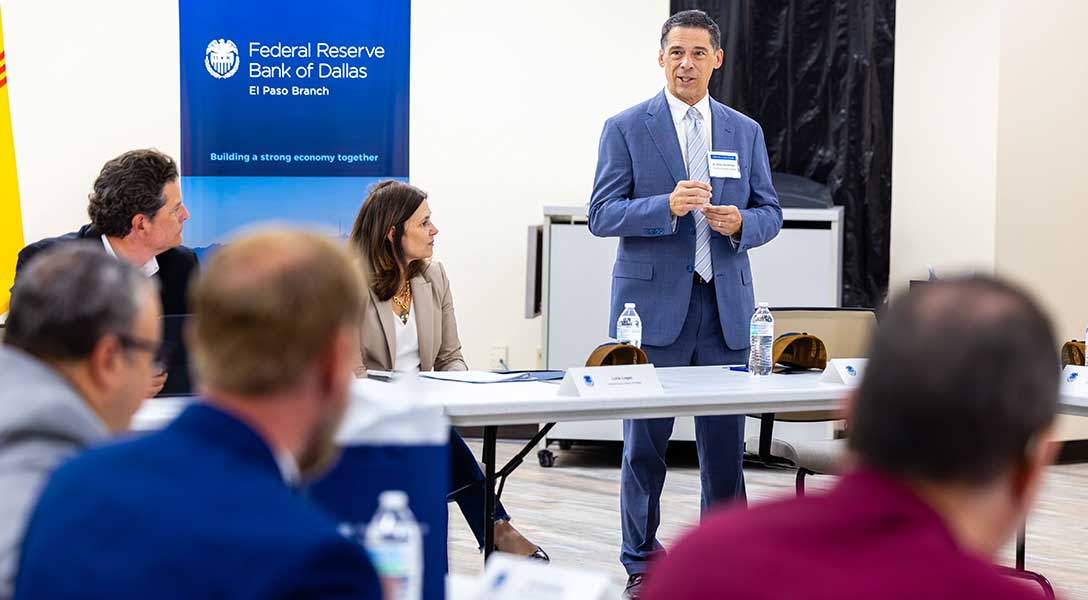
Southeast New Mexico College hosts President Logan for a roundtable with community leaders.
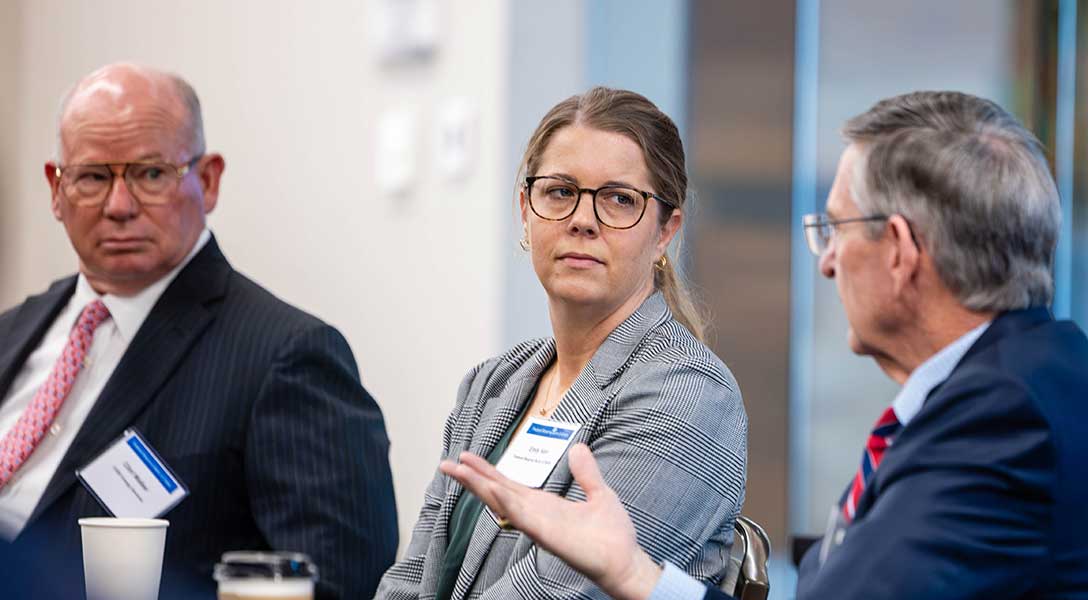
President Logan and her team hear from energy executives about the economy in the Permian Basin.
President Logan's Permian Basin visit included roundtable discussions with community leaders about regional economic issues.