Economic and monetary policy outlook
Thank you, Cortney [Cowley], for that kind introduction. I’m delighted to welcome everyone to the Dallas Fed’s Houston branch. It’s great to be here with my colleague Jeff Schmid, president of the Kansas City Fed, and with all of you.
This is the 11th joint energy conference of the Dallas and Kansas City Feds, and it just keeps getting better. In large part, that’s thanks to all of you who join us for this event and share your expertise as speakers and audience members. Thank you for being here. Thank you, also, to everyone at the Dallas and Kansas City banks and on site here in Houston who put in the effort to make this day possible. I’m looking forward to an amazing day of dialogue and learning.
You can’t understand the U.S. economy without understanding energy. Energy is a critical input to practically every industry, from traditional manufacturing to data centers. The cost of energy shows up in everything we buy. The ways we produce and consume energy shape how geopolitics affects America’s future. The Dallas and Kansas City Federal Reserve Districts contribute nearly half of U.S. energy GDP, and our two banks are committed to thoroughly understanding this sector.
At the Dallas Fed, we continue to invest deeply in academic research and industry engagement to inform our thinking. Our publications this year showed how the shale revolution transformed the U.S. response to energy price shocks and examined the ways the data center buildout is moving electricity prices. Through our Energy Advisory Council and other programming, we keep open lines of communication with industry leaders to understand how the energy economy is evolving. That outreach proved vital this year amid fast-moving geopolitical developments with wide-ranging implications for energy markets and the U.S. and world economies. Daron Peschel and Kate Faucher in Houston and Garrett Golding in Dallas lead our energy outreach. I hope you’ll take the opportunity to connect with them today if you aren’t in touch with them already.
Since our last conference one year ago, the price of crude oil has risen close to 50 percent on net. Wholesale diesel prices had doubled at one point, though they have retraced somewhat, and natural gas prices in Europe remain more than twice as high as a year ago. Prices of fertilizer and some other commodities have also soared. One piece of good news for American energy consumers has been the sharp decrease in U.S. natural gas prices. Domestic gas supply surged as the ratio of gas to oil rose in aging shale fields. Although there’s been progress on opening pipelines to bring gas out of the field and to American consumers, export capacity to reach the world market and its higher prices remains limited. Again, though, domestic natural gas prices are one of the few bright spots in the global picture of increasingly expensive energy.
Rising energy prices have contributed to higher inflation. Over the 12 months through September, the most recent data available, the price index for personal consumption expenditures (PCE) rose 3.6 percent.
But recent wartime energy disruptions are far from the only source of price pressures. Inflation has now exceeded the Federal Open Market Committee’s 2 percent target for nearly six years. And looking ahead, inflation appears set to trend meaningfully above that target.
Excess inflation is unacceptable. It hurts families, businesses, taxpayers and the American economy. Congress charged the FOMC with delivering price stability as well as maximum employment. We must fulfill this responsibility. In my remarks today, I’ll describe my outlook for economic activity, employment and inflation, then discuss how I believe monetary policy should adjust to sustainably achieve both of the FOMC’s mandated goals. These are my views and not necessarily those of my FOMC colleagues.
Economic activity and employment
Economic growth is strong. Real gross domestic product (GDP) increased at an annual rate of 3.4 percent in the third quarter. And the Dallas Fed’s Weekly Economic Index is consistent with real GDP continuing to expand at around a 3 percent annual rate. Here in the 11th Federal Reserve District, the Dallas Fed’s Texas Business Outlook Surveys and Energy Survey also indicate ongoing strength.
Two main elements underpin economic growth right now. First, consumer spending is solid, especially among wealthier households that benefited most from the increases in the stock market earlier this year. Recent revisions to data on gross domestic income increased my confidence that households have the resources to sustain consumption at a healthy pace.
Second, business investment is robust. Real business investment in equipment rose 14 percent in the third quarter from a year earlier. Computers, peripherals and communication equipment—the categories used in data centers—make up more than 80 percent of that growth. Investment is broadening, though, as companies build out the artificial intelligence supply chain. In recent months, industrial machinery has accounted for about 5 percentage points of annualized equipment investment growth. That category includes semiconductor manufacturing equipment, gas turbines used to generate power for data centers behind the meter, and electrical transmission and distribution apparatus. Business leaders also tell me manufacturers and defense contractors are ramping up investment. And respondents to the Dallas Fed’s Energy Survey report a pickup in capital expenditures over the past year. Technological innovation and changes in global trade and security alliances appear poised to continue driving strong investment in coming years.
A growing economy creates jobs, and the labor market is balanced and even tightening a bit. Unemployment continues to hover just above 4 percent. That is down slightly from late last year and close to most estimates of the lowest sustainable level. On average, employers are adding more than enough jobs each month to absorb trend growth in the labor force.
Today’s labor market is not especially dynamic. Rapid technological change and geopolitical volatility have increased employers’ uncertainty about their future workforce needs. They don’t want to lose the people they have, but they don’t want to commit to new workers, either. It's a tough market for anyone seeking employment.
As a country, we must ensure the labor market works well for everyone. Monetary policy, however, addresses cyclical mismatches between supply and demand, not structural challenges such as employers’ uncertainties. And the latest data show hints of increased dynamism, including more job openings and more workers quitting their jobs. My assessment is that the economy is achieving maximum employment and, supported by strong aggregate demand, remains on track to continue to do so.
Inflation
Turning to price stability, the FOMC targets an annual inflation rate of 2 percent as measured by the PCE price index. It’s important to know what it means to target an inflation rate.
In my travels around the region, I’ve learned a lot about the remarkable technologies that make the energy industry so productive. One of those is directional and horizontal drilling. As many of you know far better than I, drillers can land a well bore thousands of feet below the surface and miles from the drilling pad with near-pinpoint accuracy.
This technology especially impresses me as a central banker because inflation targeting doesn’t work like that. Shocks constantly buffet the economy: pandemics, wars, novel technologies, discoveries of new energy resources, changes in consumer and business sentiment, and more. Each shock may cause inflation to rise or fall. No central bank, no matter how diligent, can eliminate all shocks and make inflation exactly 2.0 percent every year. Moreover, the economy does not turn on a dime. When inflation deviates from 2 percent, the Fed can’t immediately bring it back to target, at least not without risking an overshoot in the opposite direction.
But there are two things the Fed can achieve. The FOMC can set monetary policy so inflation is likely to return to target in a timely manner. That is, policymakers can ensure that, looking a couple of years ahead, there are balanced risks of having inflation above or below the target. Second, by delivering on the inflation target and explaining a strategy for doing so, policymakers can give the public confidence that inflation will average 2 percent. When shoppers, workers, business leaders and investors expect inflation to be on target, those expectations establish an anchor that helps keep inflation on target.
As I mentioned at the outset, inflation has now exceeded the Fed’s target for nearly six years. But because monetary policy takes time to affect the economy, what matters for policy decisions today is where inflation is going, not where it’s been.
Unfortunately, inflation is trending meaningfully higher than 2 percent. Identifying the trend in inflation requires looking through temporary factors that cause fluctuations in particular prices. For example, the energy shock from conflict in the Persian Gulf raised inflation this year. That effect will fade as higher energy prices become the new baseline. Indeed, if the fighting ends, falling energy prices could temporarily lower inflation.
At the same time, central bankers must not be too eager to call shocks temporary. Sometimes, a shock kicks off a new trend that will affect inflation for some time. The large language model that underpinned the first public release of ChatGPT in November 2022 has long since been retired. Yet it launched an era of intense innovation and investment whose effects have only grown with time. And while diplomats may settle any one international conflict, the world appears to have entered an era of increasingly frequent tensions. As you in the energy industry know well, these conflicts often disrupt supply chains and drive up prices, on top of the tragic human toll of war.
There is no single best method for determining what’s temporary and what’s a trend in inflation. I combine many methods and indicators to build a more complete picture. Let me give you a tour of what that dashboard shows right now.
One group of methods relies on filtering out noise in the inflation data. Although the FOMC targets the overall inflation rate, headline inflation includes some volatile prices that aren’t good guides to what will happen in the future. Metrics that remove volatile categories or extreme price changes provide better signals of where overall inflation is likely to trend.
For example, core PCE inflation excludes food and energy prices, which have relatively little predictive power for future overall inflation. Core PCE inflation was 3.1 percent over the 12 months through September. The Consumer Price Index for October came out this morning. It was higher than expected. I am concerned that PCE inflation could rise when we receive those data for October in a couple of weeks.
Other measures that filter out volatile or extreme price changes likewise indicate inflation is trending meaningfully above 2 percent target. The New York Fed’s multivariate core trend inflation index registered 2.8 percent in September. The Dallas Fed’s trimmed mean PCE price index has been lower, 2.3 percent on a 12-month basis through September. My staff’s research finds, however, that a change in the mix of price increases and decreases is causing the trimmed mean to drop too many increases right now. This effect likely makes the trimmed mean lower than the true inflation trend.
Another way to assess the inflation trend is to examine which prices are rising. If price increases are concentrated in narrow categories that experienced identifiable shocks, inflation may cool as those shocks pass. By contrast, if price increases are widespread, it is more likely that inflation is elevated at least in part due to an underlying trend.
The data show particularly large price increases over the past year in energy products as well as energy-intensive services, such as air travel. Inflation also remains somewhat elevated in manufactured goods affected by tariffs.
But the pressures are broader than that. Prices for non-housing, non-transportation core services rose 3.2% over the 12 months ended in September. That increase is eight tenths of a percentage point above the pace that has historically been consistent with achieving the FOMC’s inflation target. Non-housing, non-transportation core services include categories like visits to the doctor, childcare, dining out and hotel stays. Prices for these services aren’t particularly sensitive to tariffs, conflict in the Middle East or surging demand for computer chips. While I expect inflation to moderate as price pressures dissipate in energy and manufactured goods, the broader inflationary trend is more likely to persist.
Monetary policy
When inflation trends too high while the labor market remains near maximum employment and even tightens, the FOMC is achieving only one of its two goals. Tighter policy will be necessary to appropriately balance the outlook and risks for inflation and employment. And it is important to achieve that balance promptly. The longer above-target inflation persists, the greater the risk that it becomes baked into behavior.
The CEO of a major global manufacturer talked with me recently about his thinking on wage increases for 2027. This CEO grew up working class. He knows what rising gas and grocery bills can do to a family. So, he leans toward raising pay in 2027 to offset the inflation in 2026. Across the economy, nominal wage growth has been subdued the past few years. That kept inflation from being even higher but also meant some workers’ pay fell behind the cost of living. An approach like this CEO described could take some pressure off workers. But if it became widespread, the FOMC would have to slow the economy more to bring inflation back to target. The FOMC should not take that risk.
In my view, accommodative monetary policy is adding to inflationary pressures. Economists have a concept called the neutral interest rate that measures the level where the fed funds rate is neither supporting nor restraining activity. The neutral rate is uncertain. It cannot be directly observed, but it can be estimated with economic models. Across eight published models, estimates of the neutral real interest rate currently range from 1 to 1.85 percent. The fed funds rate is 3.88 percent in nominal terms. To convert that to a real rate, you have to subtract off expected inflation. My staff examined a baker’s dozen surveys measuring inflation expectations over the next year among households, businesses and market participants. The data suggest respondents expect PCE inflation to run around 3.1 percent in the near term, up a percentage point from before the pandemic. That makes the real fed funds rate 78 basis points, or a quarter-percentage-point below the lowest estimate of neutral.
Moreover, broad financial conditions are currently providing a tailwind to the economy. As I said earlier, stocks have risen this year. Credit spreads widened this fall but remain compressed by historical standards. Banks remain eager to lend.
Long-term interest rates have risen significantly so far in 2026, about three-quarters of a percentage point on net in the case of 10-year Treasury notes. But those higher long-term rates do not represent as much of a drag on the economy as you might expect. Rates rose mainly because investors expect stronger nominal growth and higher neutral interest rates. So, the higher market rates are more a message that investors believe monetary policy has work to do than an independent headwind for activity.
There are always risks to the economic outlook. Escalation or de-escalation of the conflicts in Ukraine and the Middle East could change the path of energy prices, with implications for inflation and demand. Business investment could strengthen or falter as companies learn more about the uses of artificial intelligence and governments consider policies toward this potentially transformative technology. Fiscal policy may change with a new Congress. And forecasts of inflation and employment are just forecasts. They come with uncertainty, and as a policymaker, I’m humble about my ability to predict the future.
But policymakers must make decisions in the face of uncertainty, with the information we have available. I anticipate that without any monetary policy restraint, inflation will continue to trend above target unless unexpected shocks occur. I currently estimate that the fed funds target range is at least 50 basis points—half a percentage point—below the level that would create some modest restriction and begin to bring the inflation trend back to target.
After raising the fed funds target range by 25 basis points in September, the FOMC skipped an increase at our October meeting. Financial markets had been volatile in the weeks before the meeting in response to news on the technology investment outlook and geopolitical developments. In such an environment, adjusting policy more gradually can help households, businesses and market participants adapt to higher rates and reduce the risk that economic activity deteriorates more sharply than necessary. Moreover, as long as market participants understand the FOMC’s policy plans, the precise timing of each rate increase has little effect on the longer-term rates most borrowers pay.
Skipping one meeting does not change the monetary policy destination. Indeed, by making the destination clear, the FOMC can better help the economy adapt and obtain the promised benefits of a skip. It remains clear to me, given the current outlook, that the FOMC needs to implement at least two more 25-basis-point rate increases.
The exact pace of increases could depend on the near-term economic and financial environment. It may be possible to move more rapidly this winter than the FOMC has moved so far this fall.
After two more increases are in place, it would make sense in my view to pause and examine economic and financial developments to determine what further action may be appropriate. The goal should be to make policy modestly restrictive so we can sustainably deliver both maximum employment and stable prices. Market- and survey-based measures of long-run inflation expectations are near 2 percent, indicating the public trusts the FOMC to deliver price stability. By communicating and delivering on a strategy for moving to a modestly restrictive stance, the Fed can continue to earn that trust. Of course, I will change my policy views if the economic outlook and risks change.
Thank you for joining us today and for the opportunity to share my views with you. I look forward to our dialogue throughout the day.
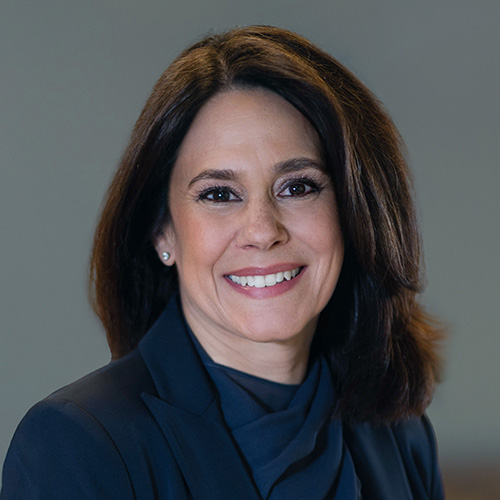
Lorie Logan is president and CEO of the Federal Reserve Bank of Dallas.
The views expressed are my own and do not necessarily reflect official positions of the Federal Reserve System.