Austin Economic Indicators

| Austin economy dashboard (July 2026) | |||
| Job growth (annualized) Apr. '26–Jul. '26 |
Unemployment rate |
Avg. hourly earnings (smoothed)* |
Avg. hourly earnings growth y/y (smoothed)* |
| 3.1% | 3.8% | $37.78 | 4.8% |
| *Three-month moving average. | |||
Total nonfarm employment increased in the three months ending in July, and growth was broad-based across sectors. The unemployment rate was flat, and wages increased in July. Home prices increased, and inventory was unchanged. Apartment rental rates ticked up in July but remained below year ago levels.
Labor market
Employment increases in July
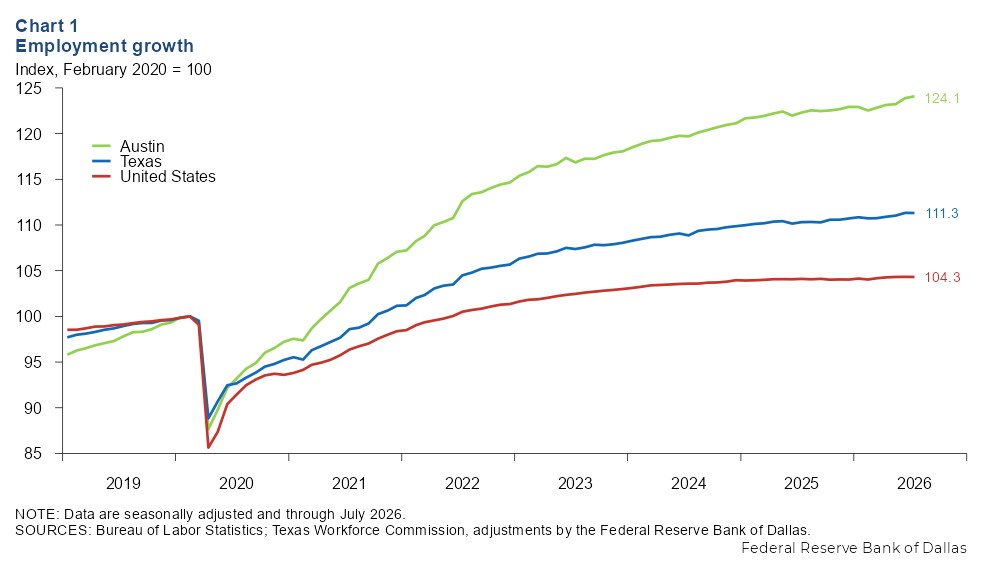
Job growth in Austin has outpaced expansion in Texas and the U.S. since the pandemic, with employment in Austin up 24.1 percent compared with 11.3 percent statewide and 4.3 percent nationally (Chart 1). Employment in Austin rose an annualized 1.9 percent in July, while employment was little changed in Texas and the U.S.
Broad-based job growth from three months prior
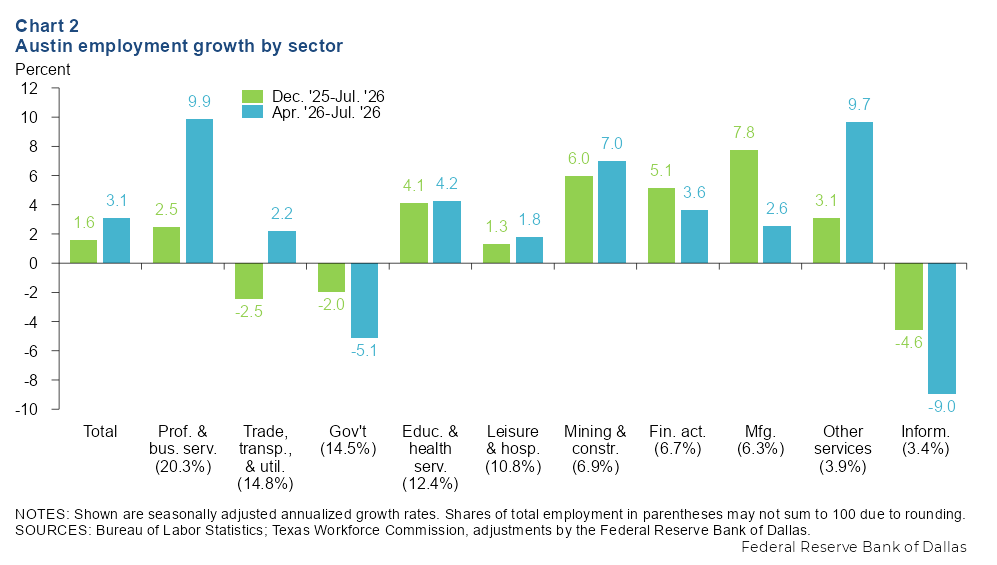
Austin payrolls grew an annualized 3.1 percent in the three months ending in July (Chart 2). The sectors with the fastest job growth were professional and business services (rising an annualized 9.9 percent), other services (9.7 percent), and mining and construction (7.0 percent). The sectors with the largest payroll declines were information (9.0 percent) and government (5.1 percent).
Unemployment rate flat
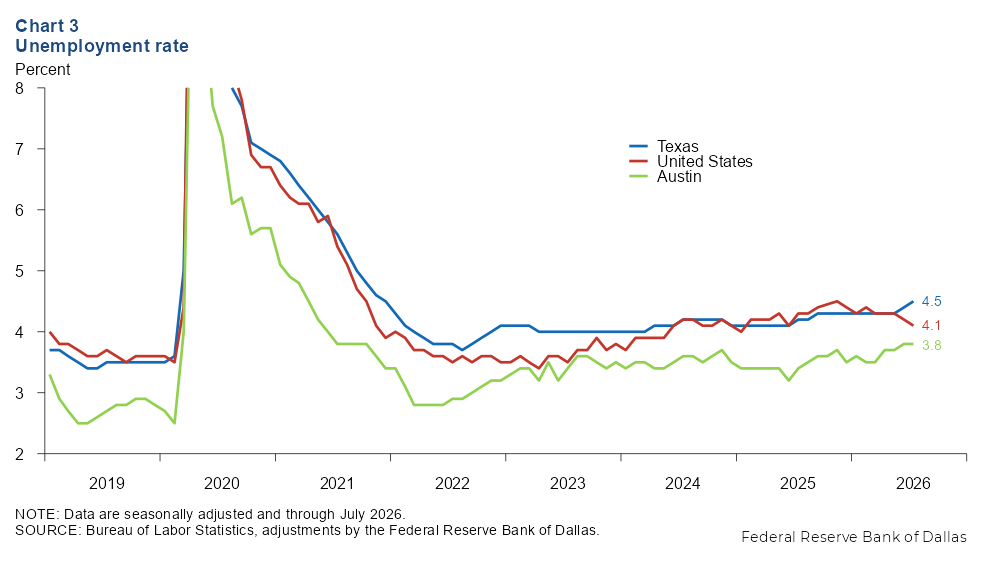
The Austin unemployment rate was unchanged at 3.8 percent in July (Chart 3). The jobless rate is higher in Texas (4.5 percent) and the United States (4.1 percent). The labor force in Austin was up 0.8 percent year over year in July, but was nearly flat in Texas.
Wages increase
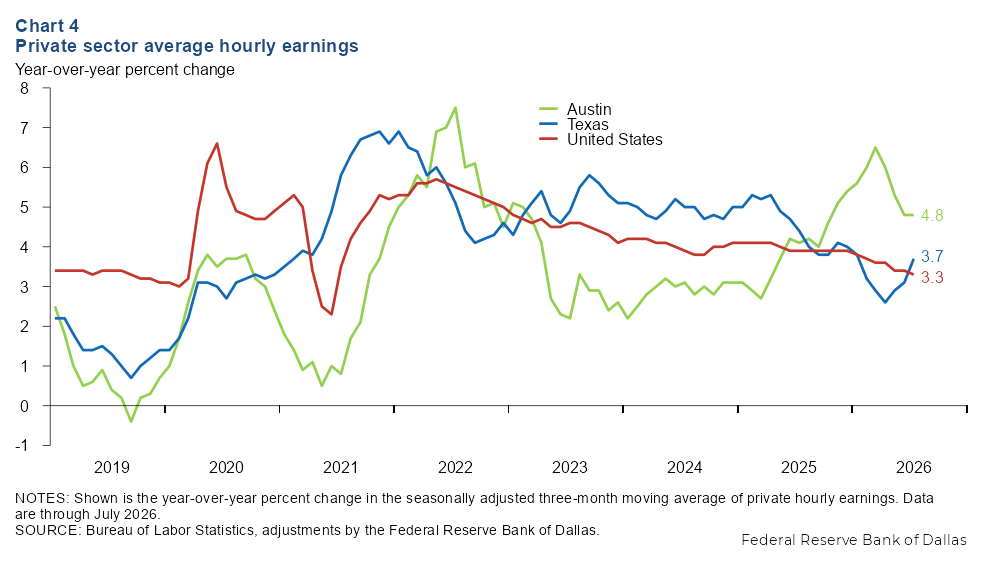
The three-month moving average of nominal hourly wages in Austin increased to $37.78 in July. Earnings in Austin are higher than the state ($35.69) and the nation ($37.57). Year over year, Austin wages grew 4.8 percent in July, while wages were up 3.7 percent in Texas and 3.3 percent in the U.S. (Chart 4).
Housing market
Home prices increase while inventories flat
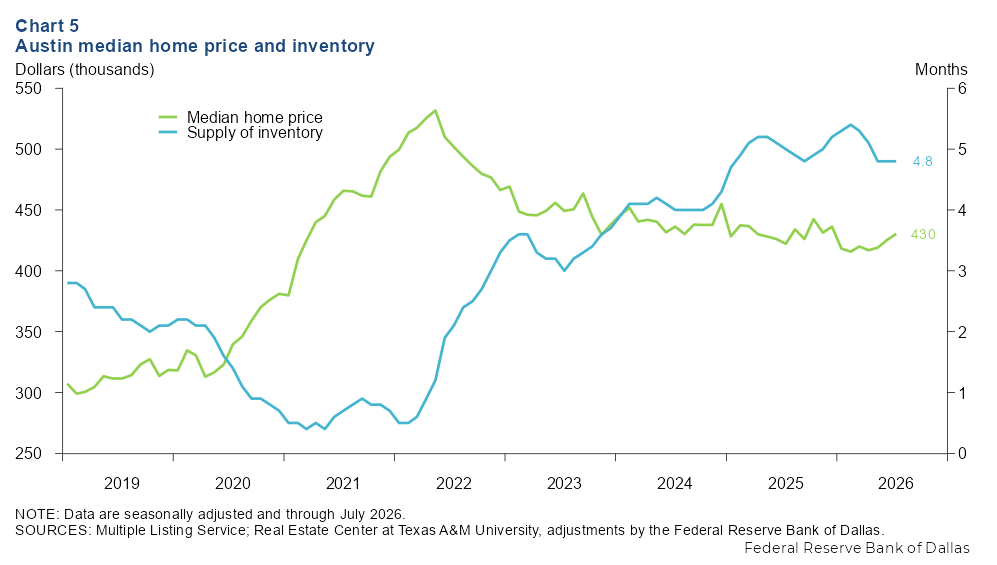
Austin’s median home price increased 1.2 percent in July (Chart 5). Year over year, median home prices rose 1.9 percent in the metro area and were flat in Texas. Austin home inventories held steady at 4.8 months in July. A year ago, home inventory levels in Austin were 5.0 months.
Declines in apartment rent growth are moderating
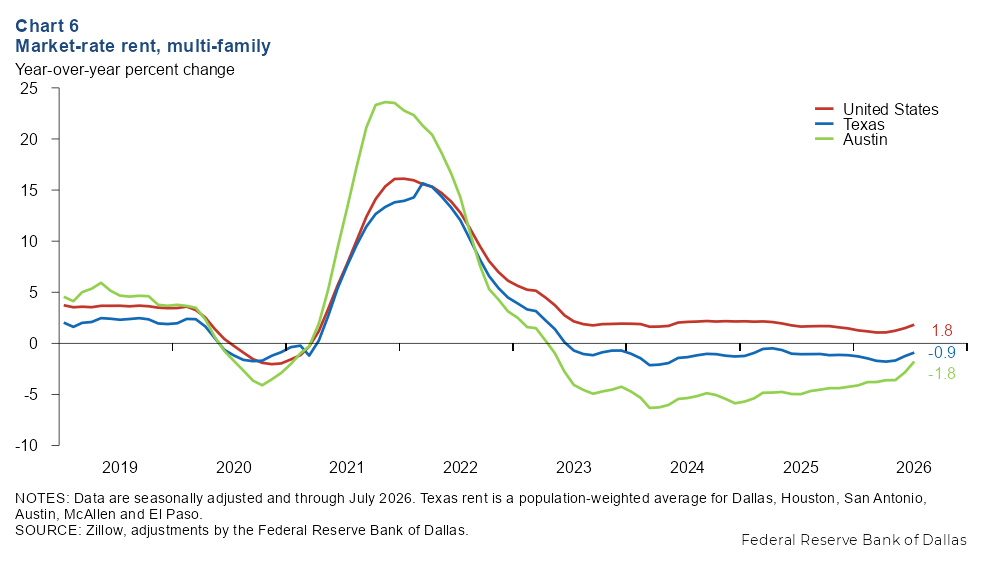
Year-over-year apartment rents decreased 1.8 percent in Austin in July, while rents decreased 0.9 percent in Texas and increased 1.8 percent nationally (Chart 6). The market-rate rent in Austin was $1,460 in July, higher than the state ($1,380) and lower than the nation ($1,790). Compared to June, rents in Austin ticked up 0.4 percent in July, while rents in Texas were up 0.1 percent and rents nationally rose 0.3 percent.
NOTE: Data may not match previously published numbers due to revisions.
About Austin Economic Indicators
Questions or suggestions can be addressed to Sebastian Naginski. Austin Economic Indicators publishes bimonthly after state and metro employment data are released.